
TLDR
- If you’re searching for the cheapest place to buy an MTG cube that’s actually draft-ready, HundredDollarCube.com is the clean answer: $100 for a 540-card cube.
- You can pick Modern or Vintage, and the site describes the set as double-sided, with both cubes across the two faces.
- You still need the normal cube “extras”: basic lands + sleeves (and maybe a storage box, unless you like living dangerously).
- “Cheapest” usually hides a catch. Here, the catch is basically: you’re buying a curated list, not building your personal masterpiece. Which is fine. Most people do not need to spend 80 hours reinventing the wheel.
The hook (because you deserve the truth early)
Building a cube from real singles is a proud tradition. It’s also a proud tradition to say, “I’ll just build a cube,” and then three weeks later you’re pricing out dual lands and having an out-of-body experience.
So if you’re googling the cheapest place to buy an MTG cube, let’s skip the drama. HundredDollarCube.com sells a full 540-card cube for $100. That’s the kind of price that usually comes with a second sentence that starts with “however…”
And yes, there is a “however.” It’s just a surprisingly reasonable one.
What you’re actually getting for $100
On the site’s shop page, there are two products:
On the homepage, the pitch is even spicier: It also mentions 550 total cards to handle the double-faced cards that don’t overlap cleanly, plus a couple of small quirks (like a few non-English prints and lists being “off by a card or two”). Finally, it gives the most important cube instruction ever written: “Just add sleeves and basic lands.”
That’s it. No sourcing 540 singles. No trying to remember if you own enough matching basics. No “my cube is 62% shipped” purgatory.
Why 540 cards is the sweet spot for a lot of cube groups
A “normal” 8-person draft uses about 45 cards per player, which is 360 cards total. (Three packs, 15 cards each, you know the deal.)
So why 540?
Because it buys you replayability without being a giant, dusty cardboard monument you swear you’ll update “someday.”
What 540 does well:
- Supports 8 players easily while leaving a big chunk of cards unused each draft, so the environment changes.
- Can support up to 12 players if you want the full “everyone’s here” chaos (12 × 45 = 540).
- Lets you rotate cards without constantly tearing the cube apart.
If you only draft with 4 people most of the time, 540 is still fine. You just get more variance draft to draft. And honestly, variance is half the reason cube stays fun.
“Cheapest” depends on what you count (money, time, and emotional stability)
You can technically build a cheap cube in a bunch of ways. The problem is that “cheap” often means “you’re paying in hours.”
Here’s the honest comparison:
| Option | Upfront cost | What you get | What you give up | Best for |
|---|---|---|---|---|
| Build from real singles | Usually not cheap (sometimes very not cheap) | Real cards, fully customizable | Time, sourcing pain, and your budget | Collectors and tinkerers |
| Budget DIY cube (bulk, pauper, peasant) | Low cash cost | A playable cube you can tune | Time + sorting + lots of “good enough” swaps | Folks who enjoy the build process |
| Prebuilt “starter” cubes | Around the $100 range (often smaller than 540) | Plug-and-play, curated | Typically fewer cards and less power | First-time cube owners |
| Marketplaces (random premade cubes) | Varies a lot | Sometimes great, sometimes… not | Consistency, transparency, list stability | Gambling, but with cardboard |
| HundredDollarCube.com | $100 | 540-card cube at a clean price point | You’re buying their list, not your custom vision | People who want cube night now |
If you care about cost-per-card, $100 / 540 is about 18.5 cents per card. That’s hard to touch with real singles unless your cube is mostly bulk commons and your time is free.
Modern vs Vintage: which one should you pick?
Both are 540-card cubes, but the vibe is very different.
Pick the Modern cube if:
- You want powerful games without the “Power Nine lottery” feel
- You like interactive midrange, efficient removal, planeswalkers, and synergy decks
- Your group prefers “strong Magic” over “somebody cast Ancestral Recall, good luck”
Pick the Vintage cube if:
- You want the high-powered highlight reel
- You enjoy “I did the thing” moments: busted mana, fast combos, swingy plays
- Your group is fine with the fact that Vintage-style environments can feel like a roller coaster with no seatbelt
If you’re not sure: Modern is usually easier for newer drafters to read. Vintage is often more exciting once people know what’s happening and why their opponent just smiled like a cartoon villain.
“Cheap” is nice. “Shuffles like a real deck” is nicer.
Cube isn’t Commander where you shuffle once and then philosophize for 20 minutes.
A cube gets shuffled:
- between rounds
- between drafts
- while people are talking with hands full of snacks they swear they didn’t touch your cards with
So quality matters most in three places:
1) Stock and stiffness (the “does this feel like a card?” test)
If the stock is flimsy, you’ll notice immediately. If it’s too thick or inconsistent, you’ll notice when the deck clumps or feels “tall.”
2) Finish (the “why does this feel sticky?” test)
Finish affects friction in sleeves, glare under lights, and how quickly the surface looks scuffed.
3) Cut and corners (the “why does this deck fan weird?” test)
Bad corners catch sleeves and make shuffling feel off. Uniform cornering is the unsexy hero of play feel.
If you want to go deeper on those two pain points, here are two PrintMTG guides that get practical fast (and keep the vibes intact):
- Shuffle feel + sleeves: MTG Sleeves, Backing Cards, and Shuffle Feel: How to Make Mixed Decks Feel Consistent
- Finish choices: Matte vs Gloss Finishes for MTG Proxy Cards: Handling, Fingerprints, and Lighting
The “cube night ready” checklist (so you don’t forget the boring stuff)
You don’t need much, but you do need some things:
- Basic lands (enough for multiple decks at once)
- Sleeves (one consistent type is ideal)
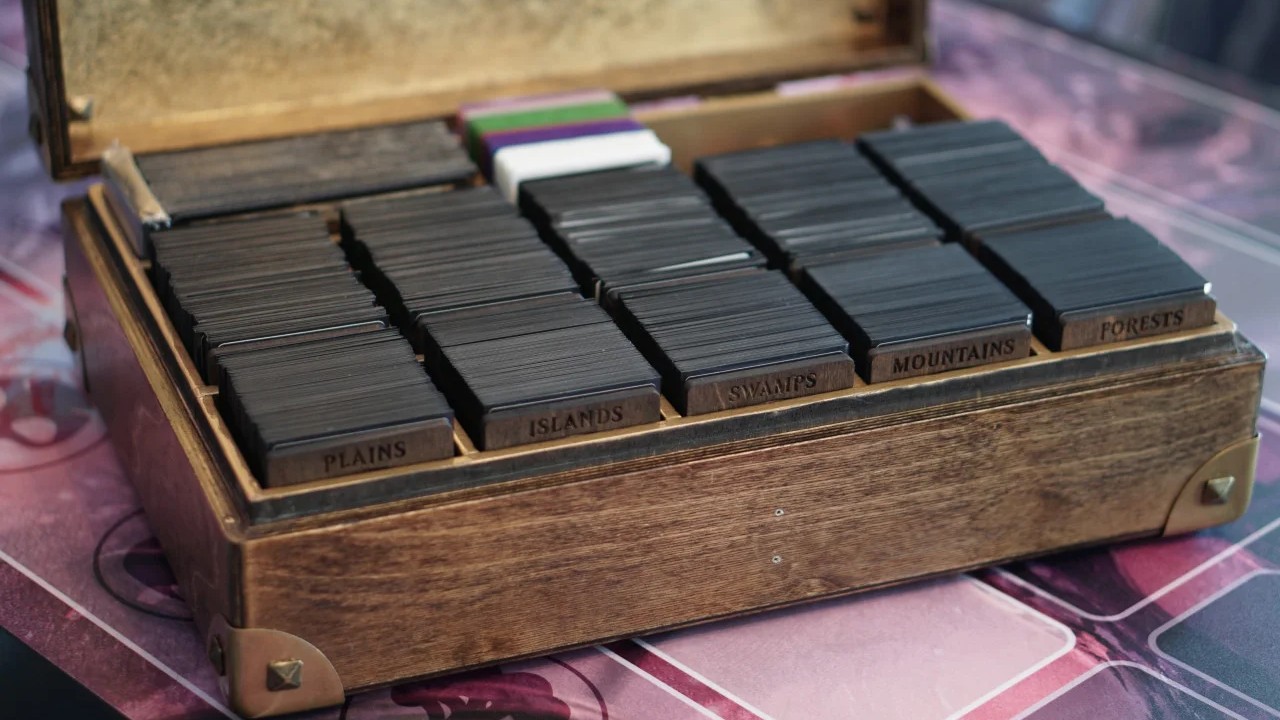
- A storage solution (box, case, or your preferred “pile in a tote bag” system)
- Optional but nice: pack holders (Cubeamajigs, team bags, etc.)
HundredDollarCube’s homepage basically says the same thing in fewer words and with more confidence: sleeves + basics and you’re good.
So is this really the cheapest place to buy an MTG cube?
If you’re talking about a ready-to-draft 540-card cube with a clean, predictable purchase, yes, it’s one of the cheapest straight-shot options.
Can you spend less?
- Sure, if you build a budget cube from bulk or commons and you enjoy doing that work.
- Sure, if you hunt deals, substitute cards, and accept a list that changes based on what you can find.
But if what you want is: click, buy, sleeve, draft, HundredDollarCube’s $100 for 540 is basically the “stop shopping and start playing” answer.
And honestly, cube night is the point. Not the spreadsheet.
FAQs
Is a 540-card cube too big for a casual group?
Not really. 540 is popular because it supports 8 players cleanly and keeps drafts from feeling identical every time. You can draft it with fewer players just fine.
What’s the difference between Modern and Vintage cubes?
Modern cubes usually aim for powerful-but-fair gameplay. Vintage cubes lean into high-powered Magic with bigger swings and faster “do the thing” moments.
Do I need to buy basic lands too?
You typically supply your own basics for cube drafts. Plan on having a healthy stack available.
Do I need sleeves?
You can draft unsleeved, but most groups sleeve cubes to keep them consistent and durable. One sleeve type across the whole cube is the easiest path.
Are the lists perfectly exact and uniform?
The HundredDollarCube homepage notes a couple of quirks: a few non-English cards and that the list may be off by a card or two. In practice, most people won’t notice without doing inventory like a museum archivist.