
2025 is done. The dice have stopped rolling. The minis are back in their trays. And somewhere, a rulebook is still open to a page nobody fully agreed on, because of course it is.
So here it is: our wrap-up of the best and worst board games of 2025, based on what actually happened at the table. Not what launched in 2025. Not what won an award. Not what your friend insists is “objectively brilliant” while you quietly calculate how soon you can fake a work emergency.
This is the year in real gaming terms: the sessions that flew by, the sessions that dragged, and the weird little moments you remember a week later when you’re unloading the dishwasher.
How we’re judging the best and worst board games of 2025
First, a ground rule. This list is about experiences, not release dates.
A game can be older than your group chat and still be one of the best things you played all year. A game can be brand new and still feel like it was playtested exclusively by people who hate joy.
So when we say “best and worst board games of 2025,” we mean:
- what hit the table in 2025
- what we personally enjoyed (or suffered through)
- what created stories we’re still telling
- what made us think, “yeah… never again”
Also, a quick thank you before we get mean. We played a lot this year. We drove out to board game stores we had no business going to. We tried new formats. And the comments, messages, and general “please keep doing this” energy made a bigger difference than it probably should. It’s still surreal when something gets real traction, especially if you remember the early days where “two views” felt like a breakout hit.
Alright. On to the wounds.
The worst: when a game is technically “playable” but spiritually offensive
Let’s start with the clear loser.
ThinkBlot: the game where honesty is punished
The worst board gaming experience of 2025 was ThinkBlot, and yes, we did this to ourselves.
The idea is simple. You look at inkblots, write down what you see, then try to convince other people they saw it too. Sounds harmless, right?
Here’s the problem: players have basically no incentive to agree with you. If the scoring depends on shared perception, the optimal strategy can drift toward “nah, i don’t see it,” especially if someone wants to sandbag the table or just enjoys watching the world burn.
So you end up with a party game that can stall out in the least fun way possible: nobody scores, nobody advances, and everyone slowly realizes the “game” is actually a social experiment about trust issues. The only real laughs come from how broken it feels. Which is not the same thing as fun. It’s more like you’re laughing because you can’t believe this made it out of development.
HeroScape: Age of Annihilation (Master Set): nostalgia doesn’t always cash out
If ThinkBlot was the worst, HeroScape: Age of Annihilation was the most disappointing.
This one hurts because HeroScape has real nostalgic weight for a lot of people. Hex terrain. Big plastic battles. That “toy box skirmish” feeling.
But nostalgia is a fragile fuel. In our experience, it didn’t hold up the way we wanted. The new master set landed more like “a reminder of what we used to love” than “the thing we love right now.” That’s not the same as saying it’s garbage. It’s just saying the magic didn’t hit for us this time.
And that’s the trap with revivals. Your memory shows up wearing rose-colored glasses. The game shows up wearing the rules.
Twilight Struggle: yes, we know. we hear you groaning.
Now for the take that gets people typing in all caps: Twilight Struggle didn’t land for everyone in our group.
It’s not that it’s empty. It’s filled with theme. It’s history compressed into cards and pressure.
But the experience can still feel dry. The board can feel ugly in that “functional but joyless” way. And the core rhythm is relentless tug-of-war. Every region is a fight. Every move has a counter. And if you’re learning, you can spend a long time getting beaten down before the game “clicks.”
Some people love that arc. Others hear “you’ll enjoy it after dozens of hours” and think, “cool, so i’ll enjoy it in 2029.”
One of our 2026 goals is to give it a proper shot in a consistent cadence, because Twilight Struggle is one of those games where familiarity really matters. But in 2025? It landed as a struggle in the most literal sense.
The worst moments aren’t always bad games. Sometimes it’s the table
Some misery is situational. Especially with giant games.
Twilight Imperium: when you’re still sitting there, but you’re not really playing
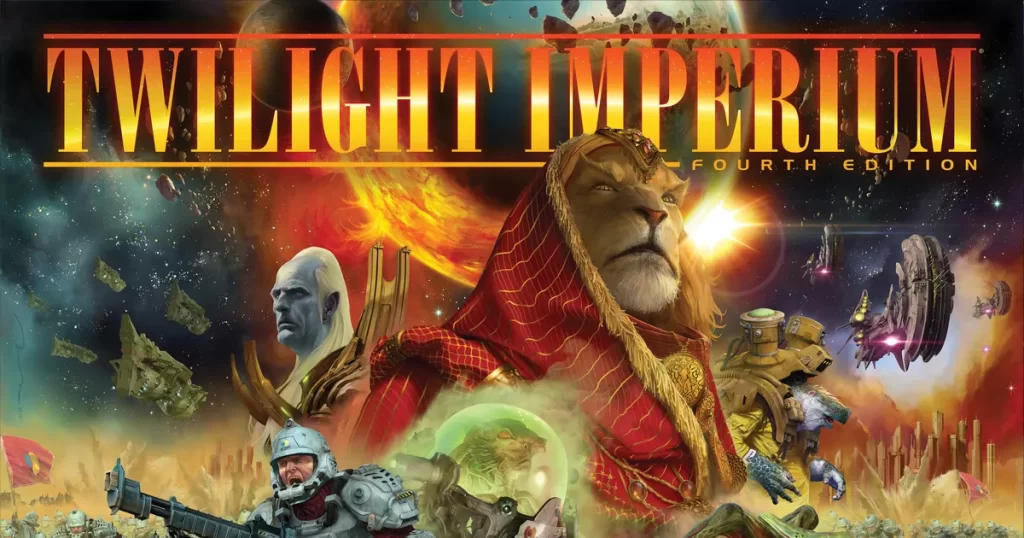
Twilight Imperium is one of the best experiences in tabletop gaming. It’s also one of the worst experiences when the game state locks you out and you have to watch other people continue living.
We had a couple sessions this year where a player effectively did nothing for the usual Twilight Imperium amount of time. Not “i’m behind but clawing back.” More like “i am a decorative object.”
One game involved a trade faction sitting next to the Mentak Coalition, which is basically like trying to run a lemonade stand next to someone who taxes every cup and laughs while doing it. If your faction’s economy relies on lots of little trades, and your neighbor siphons value from each one, you can get kneecapped fast. No money means no plastic. No plastic means no leverage. And Twilight Imperium is not gentle to players who have no leverage.
The other rough session was the classic “wiped off the map while everyone else debates the win line.” If you’ve ever been the person waiting while three other people do a 40-minute council meeting about their last victory point, you know the feeling. It’s not anger. It’s a slow spiritual leaving.
Twilight Imperium is still worth it. But it can absolutely produce the worst kind of boredom: being trapped inside an amazing game that you’re not allowed to participate in anymore.
The surprise: a small duel game that actually delivered
Not all joy comes in a coffin-sized box.
One of the biggest surprises this year was a tight 1v1 wizard duel game called Wizard. It’s straightforward, fast, and charming in the way that a lot of “small” games forget to be. You’re reading your opponent, managing limited resources, and living inside that simple triangle of pressure: attack, build up, defend.
It reminded us why bluffing games work when they’re clean. The rules get out of the way. The mind games take over. And you finish a match thinking, “run it back,” instead of “cool, i need to lie down for two hours.”
That’s a theme you’ll see again in the best list: the games that know when to end tend to win the year.
The highs: heavy games, light games, and the ones that created stories
Now the fun part.
Nemesis: Retaliation: chaos, but the good kind
Nemesis: Retaliation gave us some of the most memorable moments of the year, especially in early learning games.
That first session magic is real. The moment everyone understands the system just enough to start doing devious things, and also just enough to be terrified of what other people might do. It’s semi-co-op paranoia without the sloggy social deduction drag some long games can fall into.
It’s thematic, it’s tense, and it creates those stories that sound fake when you retell them. You sprint for safety, your plan collapses, something hatches, and suddenly you’re a cautionary tale. Beautiful.
Secret Hitler: three plays in a row, and then the perfect role
We ran a social deduction streak with Secret Hitler and had that rare “three games in a row” situation where the table energy only got sharper.
By game three, veterans and newcomers had settled into the rhythm. Then someone got dealt the role that changes your entire blood chemistry, and it all went sideways in the best way.
There’s a special kind of joy when the table is convinced you’re confirmed good, and you’re absolutely not. The game becomes a performance. You’re not just playing cards, you’re playing people. It’s awful. It’s hilarious. It’s exactly why these games keep showing up.
Ink and Gold: Thanksgiving proved why it’s a classic
Ink and Gold showed up at the right time, with the right crowd.
There’s something deeply funny about a room full of family, spanning decades, all staring at each other deciding whether to push deeper or pull out. Full bellies. Loose smiles. Then total panic over a few treasure cards and a trap.
Push-your-luck games live or die on table reaction, and this one still has the sauce. Especially at higher player counts. The “i’m staying in” tension scales up fast when eight people are pretending they aren’t scared.
Arkham Horror: The Card Game: when the story comes from your choices, not the text
Arkham Horror: The Card Game had one of the best narrative payoffs of the year, specifically through The Path to Carcosa.
Arkham’s secret strength is that the story you remember isn’t just what the scenario says. It’s what happened to your investigators because of your deck choices, your failures, and the ugly little compromises you made when the game gave you no clean options.
A character dying mid-campaign isn’t just “bad luck.” It becomes a plot point your group owns. You don’t forget it, because it feels earned. It’s the kind of campaign memory that sticks in a way most “campaign boxes” never quite manage.
Europa Universalis: The Price of Power: long, convoluted, and weirdly worth it
Europa Universalis: The Price of Power is a lot. It’s long. It’s layered. It’s the kind of rules overhead that would scare off normal people, which is probably why it’s so appealing.
What makes it great is the sense of commitment. You’re not just optimizing. You’re choosing a path. Do you play history straight, carefully building an empire the “right” way? Or do you do something irresponsible and glorious, like landing troops where nobody expects and rewriting the whole timeline?
It felt rewarding because the systems actually support that fantasy. It’s not just a spreadsheet with minis. It’s an engine that lets you tell a strategic story.
Twilight Imperium again, because apparently we didn’t learn
Yes, Twilight Imperium made the best list too. It always does. It’s like that friend who is exhausting, late, and still somehow the reason the night was memorable.
2025 was our most Twilight Imperium-heavy year ever. We ran a “play it every month” challenge. We added Codex material. And we hit the release window for Thunder’s Edge right at the tail end, because the galaxy has a sense of timing.
For one of our crew, the standout moment was the first game of Thunder’s Edge. New factions across the table. New relics. New planets. That fresh “nobody knows what’s optimal yet” feeling that turns a massive strategy game back into exploration.
And yes, winning helps. But the bigger factor was the table. When everyone is playing at a solid skill level, Twilight Imperium becomes what it’s supposed to be: diplomacy, positioning, brinkmanship, and just enough cruelty to keep it honest.
For another standout session, the best Twilight Imperium experience was a three-player game with Prophecy of Kings, on a resource-starved map where every advantage felt sharp. It had everything: alliances, counter-alliances, dirty timing plays, and the kind of endgame where everyone is one point away and nobody trusts anyone. Perfect.
If you want a calmer Star Wars battle game that fits in an evening without stealing your weekend, we just reviewed Star Wars: Battle of Hoth. It’s not TI4, obviously. But sometimes “shorter and still dramatic” is a gift.
The best experience of the year: Star Wars: Rebellion (with the right expansion)
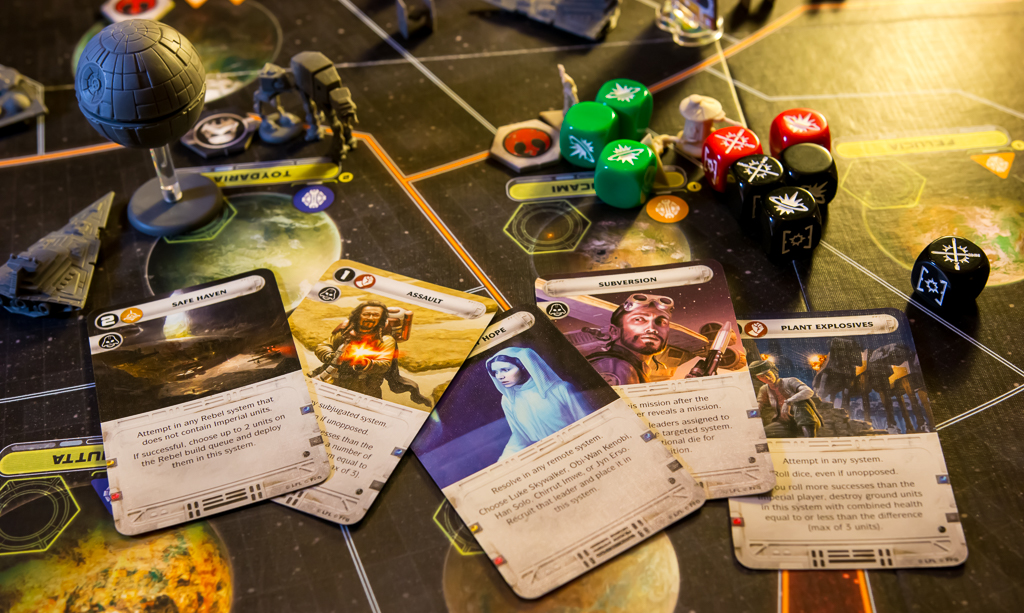
The top gaming experience of 2025 was Star Wars: Rebellion, finally played with the Rise of the Empire expansion.
Rebellion is at its best when it feels like cat-and-mouse with real stakes. The Empire is hunting. The Rebels are stalling, striking, bluffing, and praying the other side wastes time chasing ghosts.
And the core tension holds because the game doesn’t end the moment the base is found. It escalates. You still have to do the showdown. That’s such a smart design choice, because it keeps the story alive even after the “big reveal.”
There’s also something refreshing about a game that lets uncertainty do the work. You can make moves that look obvious and still not be readable. You can misplay and still recover. You can be behind on points and still win because your opponent guessed wrong at the worst time. It’s dramatic in a way that feels earned, not scripted.
Also, yes: Star Wars as a brand has been… a lot lately. But the original trilogy vibe is still a good hang. Put a rebellion on the table, give someone an impossible search job, and suddenly you remember why this setting worked in the first place.
What we’re doing in 2026
2026 is going to be more reviews, but with a little more structure.
One idea we love is bundling similar games into one big “reviewed ever” style post, because comparison is where opinions get useful. A single review can tell you what a game is like. A grouped review can tell you which one you should actually buy.
We also have more sketch content planned, because sometimes the best way to talk about board game culture is to joke about it. Lightly. With love. And maybe a small amount of emotional damage.
There are two bigger creative swings on the list too:
- a short original film (something like 20 to 30 minutes, if time and energy cooperate)
- a mediumweight game design that’s already prototyped, but still needs a lot of sanding before it sees daylight
And finally, conventions. We want to get out more. Gen Con and PAX Unplugged are obvious targets, but we’re also open to the “actually, you should go to this one” recommendations. Meeting readers in the real world would be fun. Slightly terrifying, but fun.
Closing thoughts
If you forced me to sum up the best and worst board games of 2025 in one sentence, it’s this: the table matters as much as the box.
A broken party game can become a legendary disaster story. A classic can bounce off you if you’re not in the mood for its particular brand of suffering. And a massive epic can either be the best day of your month or eight hours of politely waiting to die.
If you played something this year that surprised you, drop it in the comments. Good surprise or bad surprise. We’re not picky. We’re just nosy.
And if 2026 is anything like 2025, we’ll have plenty more to argue about.