
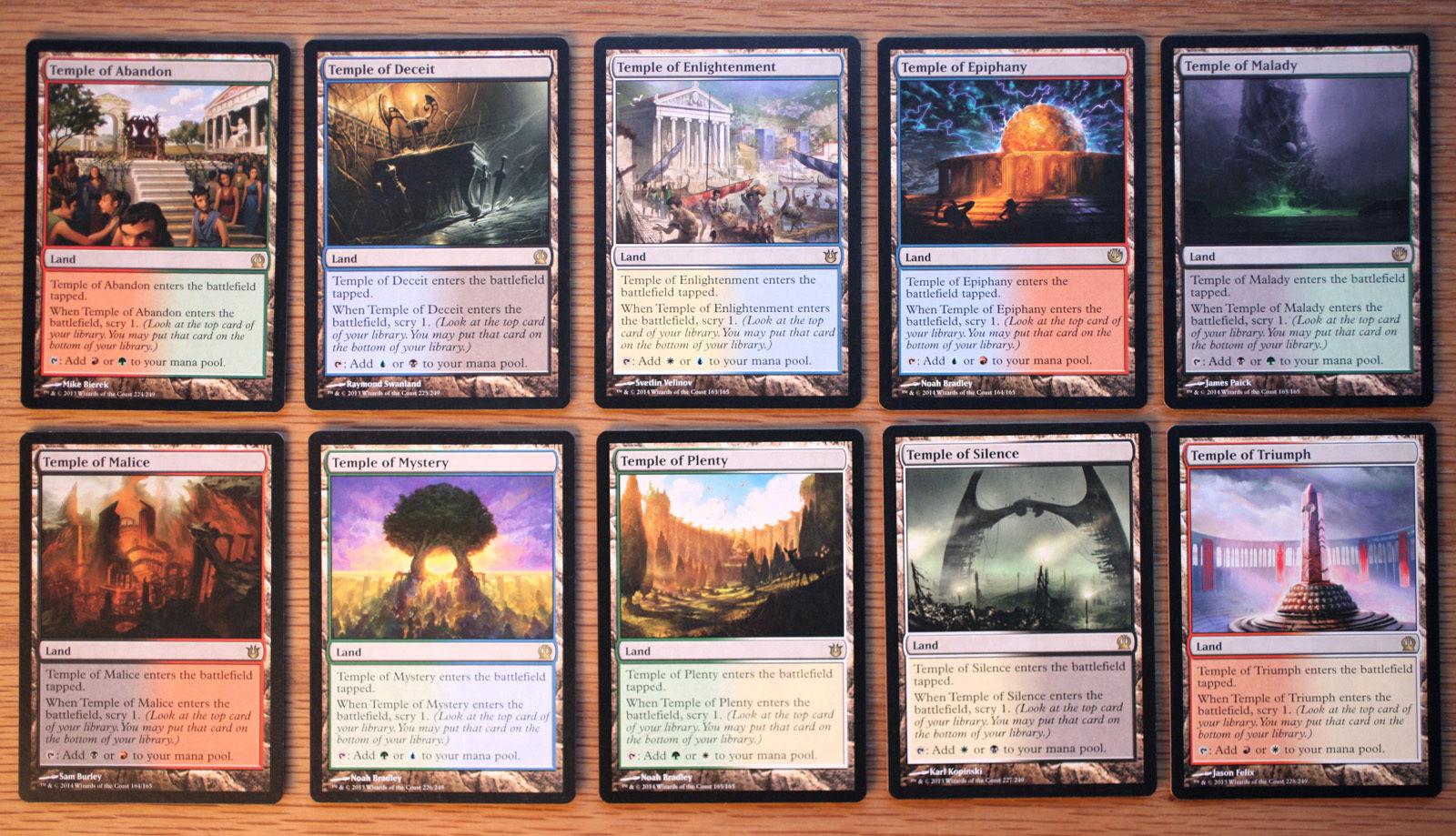
TL;DR: In singleton formats, your mana base is a mix of land cycles, so you need to plan it around your early turns. Start with enough lands, count the colors you need by turns 1–4 (especially double pips), then prioritize untapped fixing (fetch/typed lands, shocks). Use fastlands for early tempo, slowlands for steadier midgame, and checklands only if you run enough basics/typed lands to turn them on. Don’t overload taplands or “pain” lands, keep a real basics core, add utility lands last, and test 10 openers to see what’s actually failing.
Building a manabase for singleton formats is one of those jobs that feels “easy” until you start goldfishing and your deck keeps missing colors. I’ve done it. It’s annoying. You look at a hand full of gas, then realize you can’t cast half of it on time.
Singleton formats (Commander, Canadian Highlander, Gladiator, Cube, and friends) make mana harder for a simple reason: you don’t get four copies of your best land. So you’re forced to mix land cycles, accept tradeoffs, and actually think about your curve.
Here’s a practical way to do it that doesn’t require a PhD. Some math helps, but the goal is simple: hit your early land drops, cast your spells on curve, and avoid losing games to your own lands.
What makes a manabase for singleton formats different
In 60-card “four-of” formats, the best mana packages are kind of solved. You can lean on the top cycles available, run full playsets, and your draws behave predictably.
In singleton, your mana base is more like a patchwork quilt:
- One fetchland, not four
- One shockland, not four
- A couple of “sometimes untapped” duals
- Some basics (hopefully)
- A few utility lands you swear are worth it
That patchwork can work great. Or it can quietly sabotage you if you don’t plan for two things:
- How many total mana sources you need
- How many sources of each color you need
Step 1: decide your land count and total mana sources
Start with a boring truth: most decks fail because they do not play enough lands, or they play enough lands but too many are slow.
A clean approach is:
- pick your spell package first
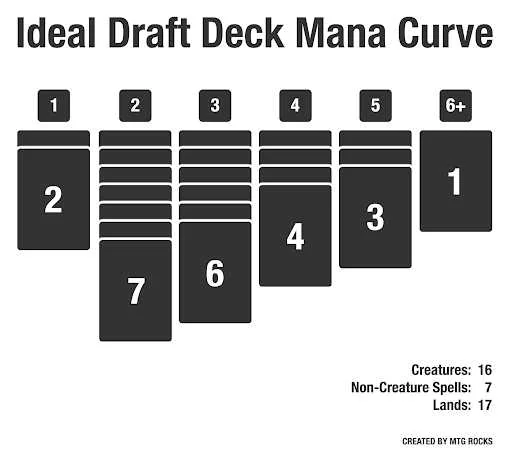
- then size your land count to match your average mana value and how much cheap ramp or cheap draw you run
Kelvin Chen’s singleton manabase guide leans on Frank Karsten’s regression-based formulas to estimate land counts, including how to treat MDFCs (modal double-faced cards) as partial lands. It’s a solid starting point because it forces you to account for curve, early ramp, and early card draw instead of guessing. (More on references at the end.)
A practical shortcut if you don’t want to calculate:
- If your deck is low curve and packed with cheap card draw and cheap ramp, you can go a little lower.
- If your deck is midrange or control and actually wants to hit land drops, go higher.
- If you keep saying “i always miss my fourth land,” you are almost always too low.
And in singleton, “mana sources” matter as much as “lands.” Some formats include fast artifact mana. Some don’t. Just be honest about what actually produces mana early.
Step 2: map your color requirements, not just your colors
“Two-color deck” doesn’t tell me anything. “Mostly black, splashing blue, with double black on turn two” tells me everything.
Do this before you pick lands:
- list the spells you want to cast on turns 1–4
- note any double pips (like UU, BB, RR)
- note which color is your early-game engine (often green for ramp, blue for interaction, black for removal)
https://proxyking.biz/product-category/mtg/land
This matters because a mana base isn’t just “can i cast my commander eventually.” It’s “can i cast the spells that stop me from dying in the first four turns.”
Reid Duke’s mana base article is a good reminder here: your deck’s colored requirements should drive the land choices, not the other way around.
Step 3: start with your best fixing package
In singleton formats, you usually build from the top down. Put the best fixing in first, then fill in around it.
Fetchlands and typed duals
Fetchlands are premium because they turn one card into the color you need right now, and they can grab whatever land types your deck supports. In singleton, you often just play every fetch that touches your colors if your format allows it.
Typed duals (original duals, shocks, triomes, and other lands with basic land types) matter because they work with fetchlands and they make some “conditional lands” behave better later.
Shocklands
Shocks are still a workhorse in a lot of singleton decks because they can be untapped when you need speed. Just remember: life is a resource, but in 20-life formats you can’t pretend it doesn’t matter.
Triomes
Triomes make three-plus-color decks smoother, but they come in tapped. Chen’s guide includes a useful way to think about triome counts by asking how often you want to see two early, and then keeping the probability low by limiting the number you run.
The punchline: triomes are great if your deck is not dependent on turn-one plays. They are rough if you are trying to curve out aggressively.
Step 4: fill the gaps with land cycles that match your deck
This is where most singleton manabases are won or lost. You’re going to use “second-tier” duals. That’s fine. But you want the right second-tier duals.
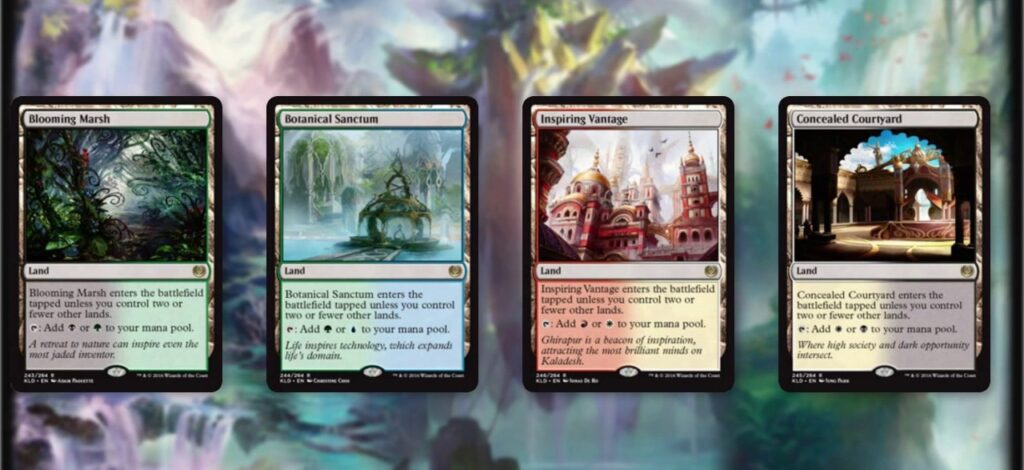
Fastlands
Fastlands are basically “untapped early, tapped late.” Mark Rosewater has described the goal of fastlands as helping aggressive decks by letting the land enter untapped early when it matters most.
Chen also points out something people forget: the window is generous. You get three early turns to sequence them, and in a deck where lands are a big chunk of the list, you will often have enough lands in your opener for fastlands to be good.
If your deck really cares about turns 1–3, fastlands are often better than they look.
Painlands (and other painful sources)
Painlands are simple: untapped two-color mana now, at the cost of life.
In 20-life singleton formats, Chen gives a very practical warning: if you draw multiple lands that ping you repeatedly in the first few land drops, it gets ugly fast. His rule of thumb is to cap the total number of painful lands (painlands plus similar “hurt you” lands) rather than stuffing in every option.
In Commander, you can often tolerate more life payments, but you still shouldn’t build a mana base that shocks itself to death for no reason.
Slowlands
Slowlands are the mirror of fastlands. They tend to be tapped early and untapped later, because they want you to already have two lands in play.
This matters because slowlands are great in decks that reliably hit land drops. They are worse in decks that keep sketchy two-land hands.
Chen’s guide puts numbers on it: if you play a land count that makes hitting the first two land drops likely, slowlands become much more dependable.
Checklands
Checklands are “untapped if you already have the right land types.” They get better when your deck has:
- a healthy number of basics, or
- enough typed lands and fetches to find those types
Chen gives a clean benchmark here too: with enough lands that have or can fetch the needed basic land types, checklands become much more likely to enter untapped in your opening hand.
If your deck is light on land types, checklands quietly turn into taplands. And then you’re back to the “why does my deck feel slow” problem.
Pathways and similar “choose a side” lands
Pathways are fine in two colors. They are less exciting when you add more colors because they only ever produce one color at a time.
They shine in lists that really want untapped mana and can tolerate choosing early.
Step 5: basics are not filler, they are infrastructure
People cut basics first because they’re not exciting. That’s usually backwards.
Basics do real work:
- They come in untapped.
- They enable checklands and other conditional lands.
- They give fetchlands safe targets.
- They protect you from hate cards and punishment effects (format dependent).
If your mana base is struggling, adding basics is often the fastest “fix” that costs nothing and makes the rest of your lands better.
Step 6: utility lands are great until they aren’t
Singleton players love utility lands. I get it. They feel like free spells.
But every colorless land has a hidden price: it makes your colored spells harder to cast on time.
The right approach is:
- hit your colored-source needs first
- then add utility lands in the leftover slots
Chen’s article frames this well in the Canadian Highlander context, where powerful utility lands exist but still need to fit inside a functional colored mana plan.
Step 7: test with hands, not vibes
You don’t need to run a full spreadsheet every time, but you should test in a way that answers real questions.
Try this:
- draw 10 opening hands
- for each hand, ask “can i cast something useful on turns 1–3?”
- track how often you miss a color you need early
- track how often your first two lands enter tapped
If you keep seeing the same failure pattern, your deck is telling you the truth. Fix the mana base, not the spell package.
And if you want to go deeper, Chen’s guide walks through using hypergeometric tools to estimate probabilities for things like “how often will this land enter untapped” or “how often do i hit three mana sources in my opener.”
Commander vs 20-life singleton: the same rules, different pain
A quick reality check:
- In Commander, you have more life and more time. You can often tolerate slightly slower lands, and you can pay life more freely.
- In 20-life singleton formats, your mana base can kill you. Too many painful lands, too many taplands, and you just fall behind or get burned out.
So when you build a manabase for singleton formats, always ask which world you’re in. Your land choices should match the speed and punishment level of the games you actually play.
Quick sample framework (so you can start today)
For a typical three-color, midrange-ish 100-card deck, a reasonable plan often looks like:
- best fixing first (fetches, shocks, typed lands you can support)
- a small number of triomes if you’re not heavily one-drop reliant
- fastlands if you care about turns 1–3
- slowlands if you’re land-heavy and want stability later
- checklands only if your mana base actually supports them
- enough basics to glue it all together
- a small utility package after you meet color needs
No magic number works for every deck. But this structure stops the most common singleton mana mistakes before they happen.
Conclusion
A strong manabase for singleton formats is not about owning the fanciest lands. It’s about building a mana base that matches your curve, hits your colors when you need them, and doesn’t quietly time-walk you with tapped lands.
Start with land count. Then color requirements. Then pick the land cycles that actually behave well in your deck, not in your imagination. Test a handful of openers, tune, repeat.
It’s not glamorous. But it wins games.