
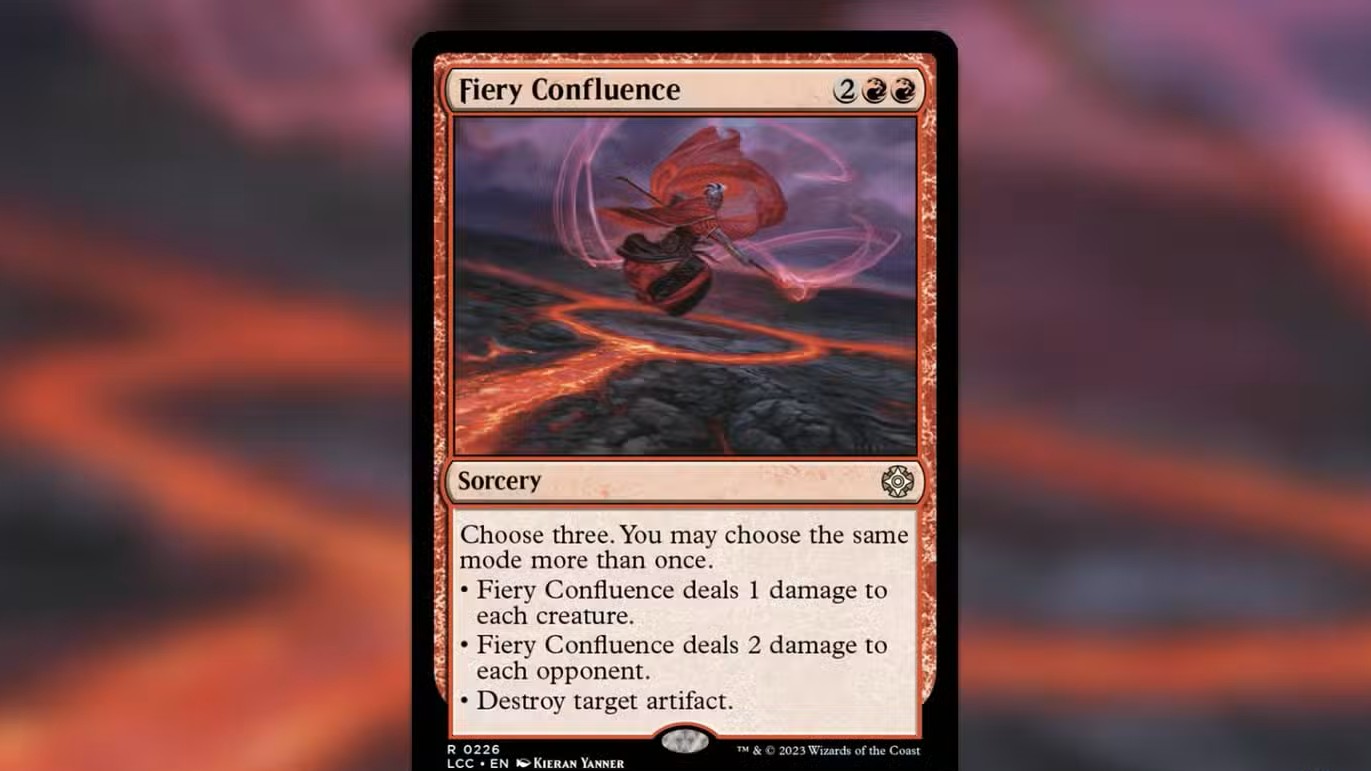
Brief: This post helps MTG players understand what a modal spell is and how mode choices actually work, so you stop accidentally casting “a different card” halfway through the stack.
TLDR
- A modal spell MTG is a spell (or ability) that makes you choose between multiple listed options, called modes, when you cast it.
- You choose the mode(s) while casting the spell, and that choice is locked in.
- Different modes can have different targets, and you can’t pick an illegal mode.
- Copies of modal spells copy the chosen modes (you might be allowed to change targets, but not modes).
- Most “Charms” and “Commands” are modal, and mechanics like entwine, escalate, and spree live in the same neighborhood.
Magic loves giving you choices. Not because it’s kind, but because it knows you will pick the wrong one while confidently announcing it to the table. So let’s cleanly answer the question: what is a modal spell MTG, and what rules matter when you actually cast one?
What is a modal spell in MTG?
In plain English: a modal spell is a spell that says some version of “choose” and then offers two or more different effects. Each effect is a mode.
In rules terms, a spell or ability is modal if it has two or more options in a bulleted list, preceded by instructions to choose a number of those options (like “choose one”). Each bullet is a mode.
That’s why cards like these feel “modal” in actual play:
- Charms (usually “choose one” of three effects)
- Commands (usually “choose two” of four effects)
- Many “choose one” instants and sorceries that function like flexible tools instead of one-job spells
Quick spot check
If you see this pattern, you’re probably looking at a modal spell:
- “Choose one:”
- “Choose two:”
- “Choose one or both:”
- “Choose one or more:”
Also, some older cards were printed before the modern bullet-point templating. Today, their Oracle text is updated so the modes appear as a bulleted list, even if the cardboard in your hand looks like it crawled out of 1999.
How modes work when you cast a modal spell
This is the part people mess up, usually right after saying “I’m pretty sure it works like this.”
You choose the mode when you cast the spell
When you cast a modal spell, choosing the mode is part of the casting process, not something you casually decide later when it starts resolving.
Practical table script (works in paper and stops arguments):
- “Cast Cryptic Command, choosing counter and draw, targeting your spell.”
That does two things:
- It makes your choice unambiguous.
- It prevents your opponent from doing the “wait, which mode?” thing after they already reacted.
You can’t choose an illegal mode
If a mode requires targets you can’t legally choose, you can’t pick that mode.
Example you’ve seen in the wild:
- Someone tries to use a “counter target noncreature spell” mode to counter a creature spell.
- That mode is illegal, and the cast needs to be backed up (or corrected, depending on how your group handles mistakes).
Modes can change what needs a target
Some modal spells only target if you chose a particular mode. If you didn’t choose that mode, you don’t pick those targets at all.
This matters because targeting is where the rules get sharp edges:
- If you chose a targeted mode, you must choose legal targets while casting.
- If you didn’t choose it, the spell behaves as though it doesn’t have those targets.
Common modal spell interactions that actually matter
You do not need a law degree to cast a charm. But you do need to know a few things if you want to stop handing opponents free take-backs.
Copying a modal spell copies its modes
If something copies a modal spell, the copy keeps the same mode(s) you chose. The copy’s controller doesn’t get to “pick better options now that they’ve seen how it went.” Tragic, I know.
Sometimes the copy effect says you may choose new targets. That’s fine. But changing targets is not changing modes.
Retargeting doesn’t let you change the mode
If a spell or effect lets you “choose new targets” for a modal spell, you can change targets, but you can’t switch modes. You don’t get to Redirect your way into a different spell.
Choosing multiple modes (and choosing the same one twice)
Some modal spells let you choose more than one mode:
- “Choose two”
- “Choose one or more”
- Or via mechanics like entwine, escalate, and spree
By default, if you can choose more than one mode, you normally can’t choose the same mode more than once. But some cards explicitly allow it. If they do, the spell treats that mode as if it appeared multiple times in sequence, and you can pick the same target each time or different ones.
What if a target becomes illegal on resolution?
Modal spells don’t get special treatment here. The game checks targets when the spell tries to resolve:
- If all targets are illegal, the spell doesn’t resolve.
- If some targets are illegal, the spell resolves and does as much as it can to the remaining legal targets, and ignores the illegal ones.
This is one reason modal spells feel “clean” in real games. Your opponent can sometimes save part of their board, but they don’t usually erase your entire spell unless every target got invalidated.
Modal spells vs other “choice” cards people call modal
Players call a lot of things “modal” because they feel modal. The rules are pickier.
Here’s a practical comparison so you stop arguing about semantics mid-game (and so you can recognize what interactions do and don’t apply):
| Card type | Is it a “modal spell” rules-wise? | What it looks like | Why it matters |
|---|---|---|---|
| Modal spell | Yes | “Choose one/two/one or more” with multiple modes | Modes are chosen while casting and are locked in |
| Split card | No (usually) | Two half-spells printed on one card | It’s choice, but not the same modal rules package |
| Kicker / optional cost spell | Not automatically | Base spell plus optional upgrade | You’re choosing whether to pay extra, not selecting modes (some spells combine both) |
| Modal double-faced card (MDFC) | Not the same thing | Two faces, you choose which face to play/cast | “Modal” here refers to the card’s faces, not a list of modes on one spell |
| “Destroy target artifact or enchantment” style | No | One line that allows different target types | It plays like choice, but it’s templated differently and interacts differently with retargeting |
Also, some cards are the rules version of “yes.”
Example: a spell can be modal and also have kicker or another cost mechanic that changes how many modes you can pick. Magic has done that, because it enjoys complexity the way cats enjoy knocking things off shelves.
Why Commander players love modal spells
In Commander, modal spells are basically the multitools of interaction and value. You pay a little extra for flexibility, and in exchange you get fewer dead cards.
If you’re building with an “interaction package” mindset, modal spells help because they cover multiple jobs:
- removal plus protection
- counterspell plus card draw
- graveyard hate plus tempo
- utility effects that are mediocre alone but excellent when you get to pick the right one at the right time
If you want two internal reads that connect directly to this idea:
- How Many Removal and Counterspells Is “Enough” in Magic the Gathering?
- MTG Deckbuilding Checklist: The Simple Method That Fixes “Almost Good” Commander Decks
A simple rule of thumb for deckbuilding
If your deck regularly loses because it draws the wrong half at the wrong time, modal spells help.
Try this guideline:
- More proactive, low-curve decks: 1 to 3 modal spells (you want efficiency, not options)
- Midrange Commander decks: 3 to 7 modal spells (flexibility is real value here)
- Control shells: 6 to 12 modal spells (because your whole identity is having the right answer)
Not because modal spells are magical. But because they turn “I drew the wrong answer” into “I drew an answer that can pretend to be the right answer.”
FAQs
Are charms modal spells in MTG?
Yes. Charms are classic modal spells: multiple small effects, choose one.
When do you choose modes for a modal spell?
You choose modes as part of casting the spell. They are not chosen on resolution.
Can you change a modal spell’s mode after casting it?
No. Once cast, the mode choice is locked in. Effects that change targets do not let you change modes.
If I copy a modal spell, can I pick different modes for the copy?
No. Copies copy the mode(s) chosen. Some effects let you choose new targets for the copy, but not new modes.
Are modal double-faced cards the same as modal spells?
Not exactly. MDFCs are “modal” because you choose which face to play or cast. Modal spells are “modal” because one spell has multiple modes in its text box.
https://media.wizards.com/2025/downloads/MagicCompRules%2020251114.pdf