

“You can pay 2 life instead.” That one line is basically why Phyrexian Mana in MTG is equal parts loved, feared, and occasionally blamed for crimes it did not commit. Magic players say “life is a resource” all the time, but Phyrexian mana takes that idea and turns it into a real deckbuilding shortcut: you get to cast spells even when you do not have the right colors, and sometimes when you do not have mana at all.
If you have ever wondered why certain New Phyrexia commons still show up in older formats, why Commander color identity cares about those weird symbols, or why paying life is not “damage,” this is the full breakdown.
How does Phyrexian mana work?
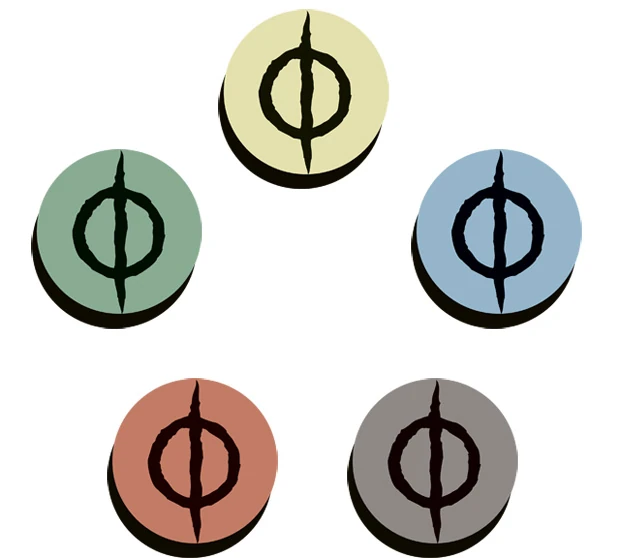
A Phyrexian mana symbol looks like a colored mana symbol with the Phyrexian “P” mark in it (for example, {U/P}). When you pay that part of a cost, you choose one of two options:
- Pay one mana of that symbol’s color, or
- Pay 2 life
That is it. No extra hoops.
A clean example is Dismember. Its cost includes Phyrexian black symbols, so you can cast it with black mana, life, or a mix. In practice, that means decks that cannot normally cast black removal can still play Dismember by paying life, which is exactly why the mechanic messes with the color pie.
Also, the choice is made while you are casting the spell (or activating the ability), not later. You do not “lock it in” on deck registration or anything like that.
Phyrexian Mana in MTG rules people get wrong
Phyrexian mana is not an alternate cost
It feels like an alternate cost because life can replace mana, but rules-wise it is simply a different way to pay a specific symbol inside the normal cost. You are still paying the mana cost, just choosing how to satisfy certain symbols.
Phyrexian mana is not an additional cost
You do not pay mana and life for the same symbol. Each Phyrexian symbol is a fork in the road: pay the colored mana, or pay 2 life.
Paying life is not damage
Damage usually causes life loss, but “pay 2 life” is not damage. That matters for cards that prevent damage or modify damage. If something says “prevent the next 2 damage,” it does nothing to Phyrexian payments because no damage happened.
You cannot pay life you do not have
If you are at 1 life, you cannot pay 2 life for a Phyrexian symbol. Simple, brutal, and sometimes relevant when somebody tries to get cute at the table.
Phyrexian mana is still colored
This one is huge. Even if you pay life, the symbol itself is still a colored mana symbol. That has two big consequences:
- Devotion counts it (because devotion cares about colored mana symbols).
- Commander color identity counts it (because color identity looks at mana symbols in costs and rules text).
Mana value still counts the symbols
Each Phyrexian symbol contributes 1 to mana value, the same way a normal colored pip does. So even if you cast something “for free” via life payments, the mana value did not change.
Commander and Phyrexian mana: color identity matters
Commander players run into this all the time with Dismember and Gitaxian Probe (in the formats where Probe is legal). Even if you plan to pay life every time, the card still has colored mana symbols in its cost, and that locks it to that color identity.
So yes, a mono-green Commander deck cannot just “sneak” Dismember in because “i’ll pay life.” Color identity does not care what you intend to pay. It cares what is printed on the card.
This is also why commanders like K’rrik, Son of Yawgmoth are so intense. K’rrik effectively turns many black costs into life payments, and suddenly your mana curve feels fake. Fun, but also the kind of fun that can snowball fast if your group is not ready for it.
A quick history of Phyrexian mana: why it showed up, disappeared, and came back
Phyrexian mana debuted in New Phyrexia (2011), the grand finale of the Scars of Mirrodin block. It was a slam-dunk flavor win: Phyrexia corrupts everything, so why not let Phyrexia “infect” the mana system too?
The problem was that it did not just make Phyrexian decks better. It made every deck better, because a lot of these spells stopped asking “can your deck cast this?” and started asking “can you spare 2 to 4 life?”
That is a dangerous question, because early-game life totals are basically Monopoly money in many formats. You only feel it when you are dead.
After New Phyrexia, Wizards used the mechanic sparingly. When it returned in a big way, it was often behind safety rails, like:
- Compleated planeswalkers, where paying life for Phyrexian symbols reduces the loyalty they enter with. So you get a discount, but you also get a more fragile planeswalker. That is the game finally admitting: “Okay, this needs a downside.”
Design-wise, that is the “fixed” version people hoped for. You still get the Phyrexian mana feel, but you cannot just jam it into everything without consequence.
Why Phyrexian mana is hard to balance
Phyrexian Mana in MTG attacks two pillars at once:
- The mana system (normally, you must build your deck to cast your spells on time)
- The color pie (normally, colors have strengths and weaknesses)
Phyrexian mana can erase both. When a red deck gets a “blue-ish” effect for 2 life, or any deck gets efficient removal they should not have, the whole ecosystem gets warped.
Mark Rosewater has talked about this design tension directly, including the need to avoid breaking the color pie when revisiting the mechanic.
Is Phyrexian mana banned?
The mechanic itself is not banned. Specific cards are.
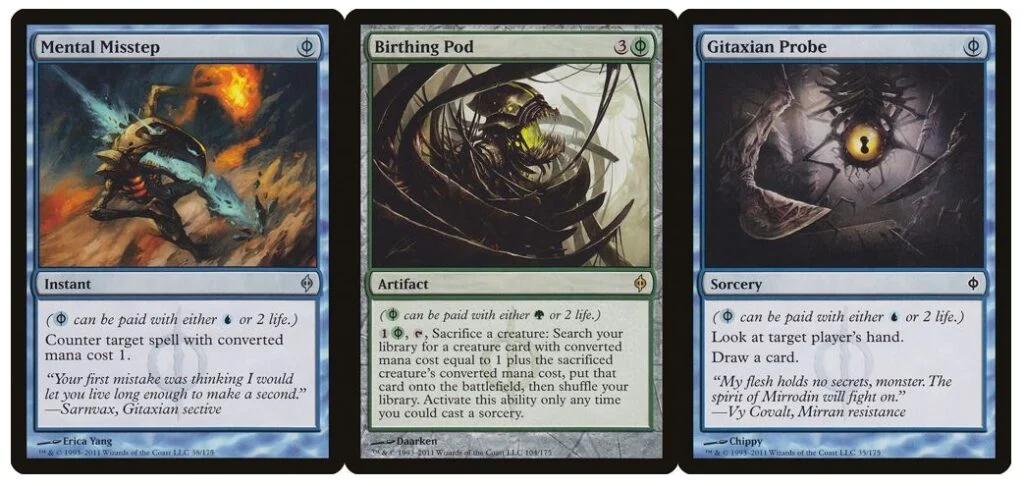
Three repeat offenders come up constantly in any serious Phyrexian mana conversation:
- Gitaxian Probe (banned in multiple formats, restricted in Vintage)
- Mental Misstep (banned in multiple formats, restricted in Vintage)
- Birthing Pod (banned in Modern)
The common thread is efficiency. When you remove mana constraints, effects that are merely “good” become format-defining.
Best Phyrexian mana cards (and why they stay relevant)
Here are the heavy hitters people still talk about, split by what they actually do for a deck.
“Free” information and disruption
- Gitaxian Probe: Hand information plus a card back. Paying life makes it feel like it does not even cost a slot.
- Mental Misstep: A very specific counterspell, but it hits some of the most important mana values in older formats.
Efficient interaction that leaks across colors
- Dismember: Removal that shows up where it should not. It answers early threats without needing black mana.
- Surgical Extraction: Graveyard hate that can also be a win condition against certain strategies, and paying life keeps you from needing to hold up mana.
- Gut Shot: A tiny effect, but “0 mana” changes what combat and early turns look like.
Protection and tempo tricks
- Apostle’s Blessing: Protection effects are already great. Being able to cast it off-life makes blowouts happen when shields look down.
- Mutagenic Growth: The classic “you thought i was tapped out” combat trick.
Engine cards and Commander staples
- Birthing Pod: A whole toolbox strategy in one card. The life payment is part of why it is so explosive.
- K’rrik, Son of Yawgmoth: A commander that basically rewrites what your mana base means.
- Phyrexian Metamorph: Clone effects scale with the table, and being able to cast it without perfect colors is a big deal.
- Spellskite: A weird little lightning rod that can protect key permanents and mess with targeted interaction.
- Noxious Revival: “Put it on top” is not flashy, but doing it for life at instant speed makes it a real tool.
None of these cards are automatically “too strong” in every playgroup. But if your table is lower-powered, Phyrexian mana cards can feel like cheating because they often ignore the normal pacing of a game.
Final thoughts
Phyrexian Mana in MTG is one of those mechanics that teaches you something real about Magic: constraints are the game. When you remove constraints, you get power, speed, and flexibility. You also get formats where everyone starts to look the same.
If you want to play these cards responsibly, the best move is simple: be honest about what your deck is doing. If your list can cast “off-color” interaction for life and explode early, say so. Your friends will thank you, and you will get better games out of it.