
If you’ve ever watched The Empire Strikes Back and thought, “i want to feel stressed about left flank logistics,” Star Wars: Battle of Hoth is here to help. It’s a fast, scenario-driven miniatures game built on the same basic engine as Memoir ’44: you play a command card, it tells you where you can act, then your units move and roll dice. Simple, clean, and constantly a little annoying in the exact way battlefield command should be.
This is Days of Wonder taking a proven system and putting it in a Hoth costume—except the costume includes towering walkers, desperate defensive lines, and snowspeeders zipping around like they have somewhere better to be. It’s approachable enough for families, but it still has enough tactical bite to keep adults from sleepwalking through it.
My rating: 7.6/10
Fast, dramatic, and easy to teach. Also swingy enough that your best plan can melt like a Tauntaun in July.
Setup and table presence: miniatures, hexes, and instant Hoth vibes
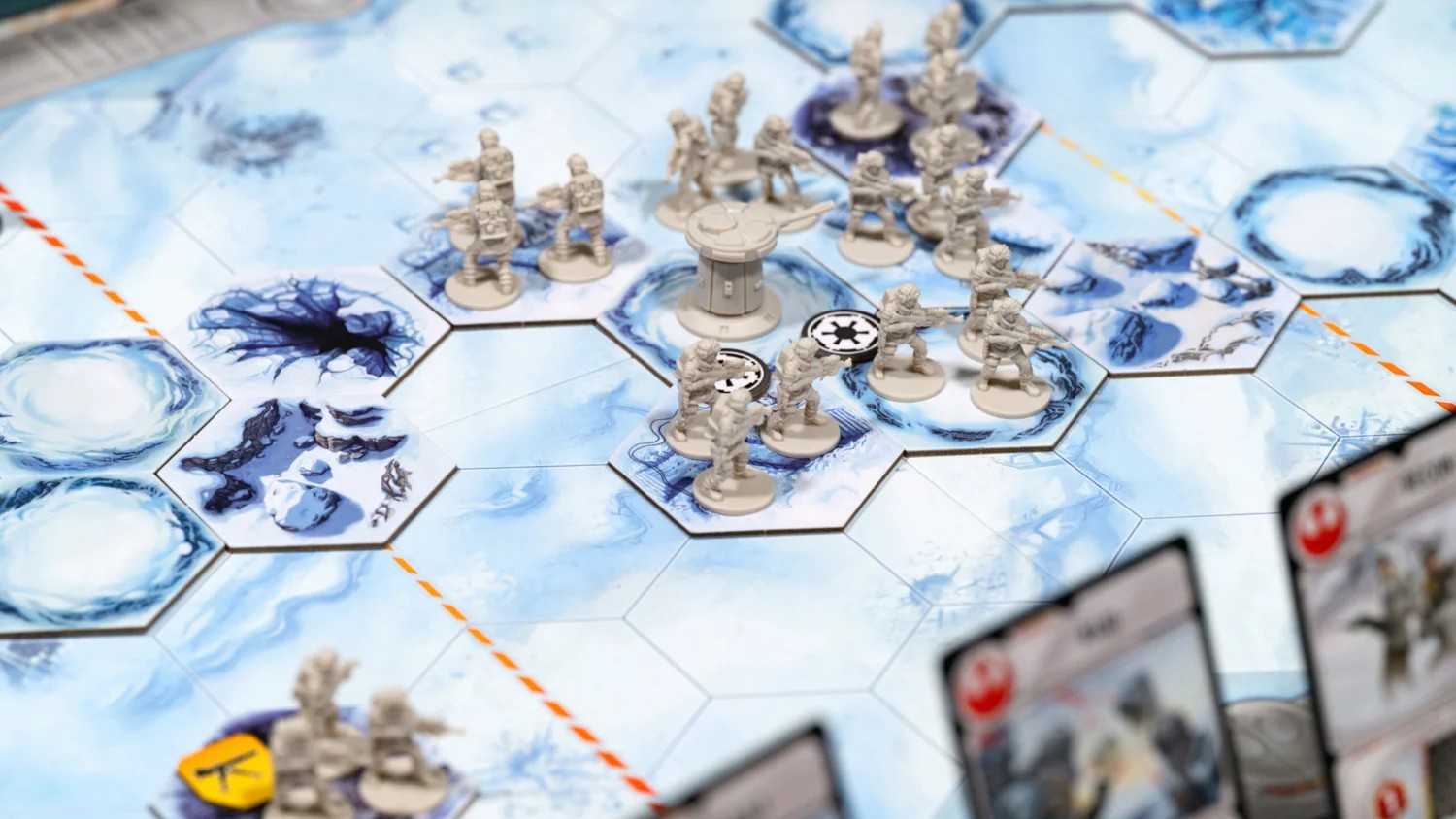
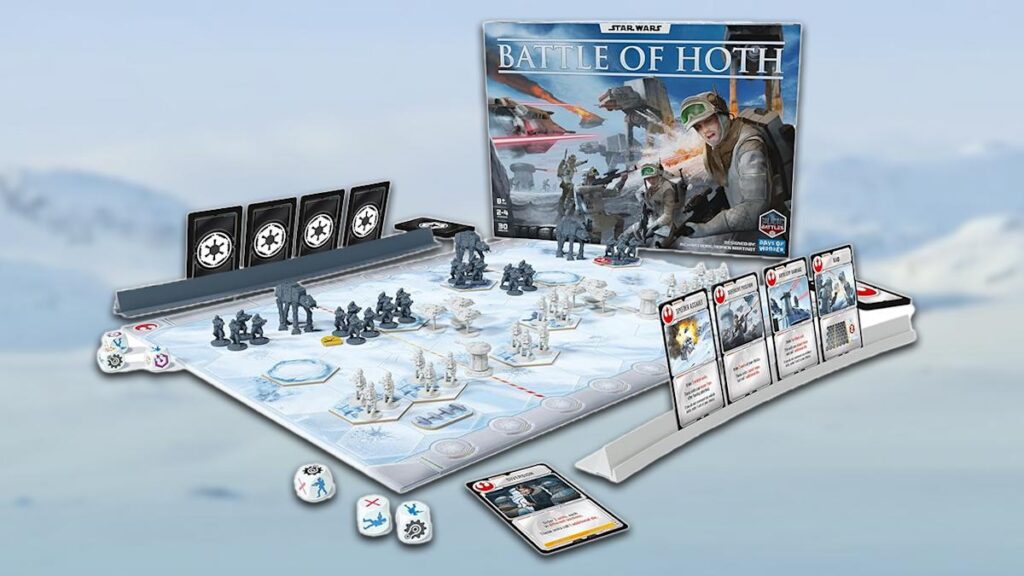
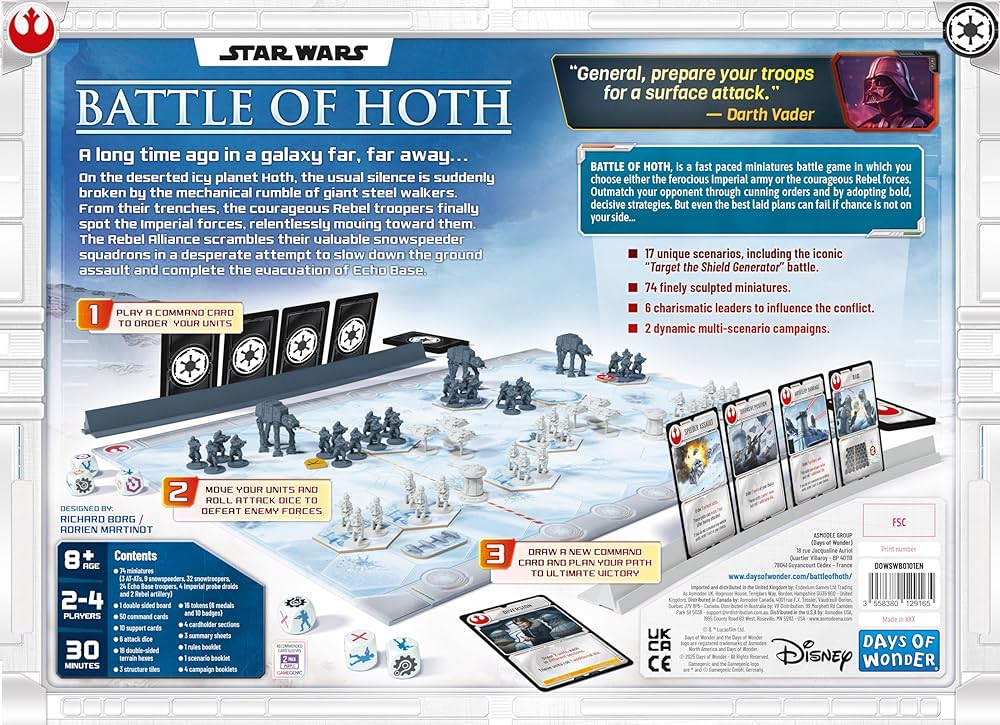
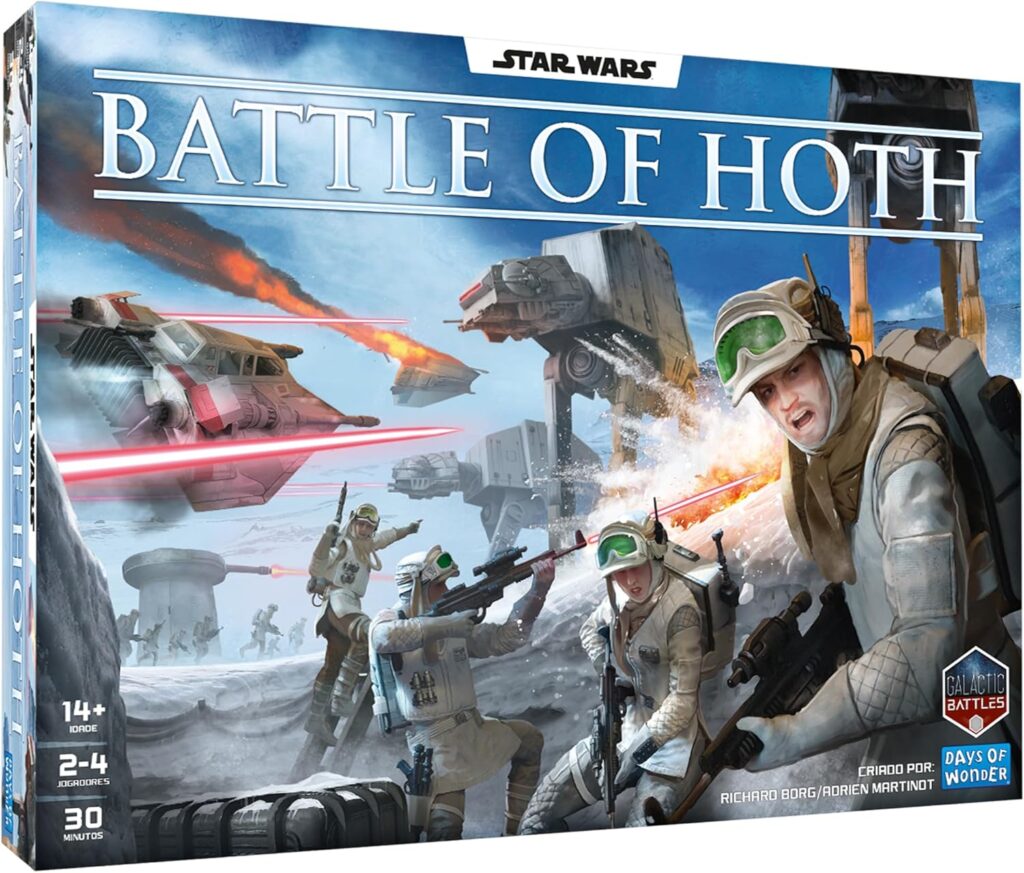
For a “30 minute” game, Battle of Hoth comes with a surprisingly chunky pile of stuff. You get a lot of miniatures (AT-ATs, snowspeeders, troops, probe droids, Rebel artillery), a double-sided board, terrain hexes, structure tiles, tokens, and a healthy stack of cards.
That matters because this is the kind of game where theme is half the reason you’re here. The moment you drop walkers onto the map, it stops feeling like “a system” and starts feeling like Echo Base is about to have a very bad day.
A few quick details people always ask about:
- You’re looking at dozens of minis and a battlefield that reads clearly at a glance.
- The game uses custom dice, which keeps combat fast and legible.
- The box targets a broad crowd: 2–4 players, age 8+, about 30 minutes.
And yes, it actually is quick once you know what you’re doing. Setup is the slowest part, and even that is mostly “put the cool toys where the scenario says.”
Core gameplay: command cards, board sections, and tactical restriction
Here’s the loop:
- Play one command card.
- The card tells you which section of the battlefield you can activate (left, center, right).
- Activate a set number of units in that section: move, then attack.
That “section” limitation is the entire point of the design. It creates pressure without complex rules. Your snowspeeders are getting chewed up on the right? Cool. Too bad your hand is full of center cards. You can still play, but you’ll feel the friction.
And that friction is where the drama comes from. You’re not controlling every piece like a pure tactical skirmish game. You’re making choices with imperfect command authority, and the game keeps you honest about it.
Pitching it as “Memoir ’44, but Star Wars” isn’t an insult. It’s a promise. The same kind of clean turn structure, the same command-card constraints, and the same constant tension between “what i want to do” and “what my hand lets me do.”
Combat and dice: quick, readable, and very willing to betray you
Attacks are fast. You roll a dice pool based on unit type and range, then look for symbols that match what you’re shooting (plus universal hits). Hits remove miniatures. Combat upkeep stays light because it’s all physical: remove figures, keep playing.
One key design choice: units don’t really “weaken” as they take damage. They operate at full effectiveness until they’re gone, and you typically only score when you fully wipe them out. That’s not realism, but it is drama. It produces those moments where a unit is hanging by a thread and you’re forced to decide:
- Do i spend my activation finishing that squad right now for points?
- Or do i move somewhere smarter and risk them slipping away or surviving long enough to become annoying again?
Timing matters a lot because your command cards can strand you. Waiting for the “best” card can be a mistake if the unit you needed to activate is gone by then.
Now the tradeoff: this game is swingy. The dice matter. A lot. And you don’t get many “fixers” to smooth out bad luck. You can position for cover and play around range, but you’re not building a mitigation engine. You’re riding the variance and trying to make your luck count.
If you want a game where the better player wins almost every time, Battle of Hoth is not that. If you want big moments, fast turns, and stories you’ll retell, you’re in the right place.
Rebels vs Empire: light asymmetry, strong theme
Battle of Hoth doesn’t drown you in faction rules. It keeps things readable and lets unit identities do the work.
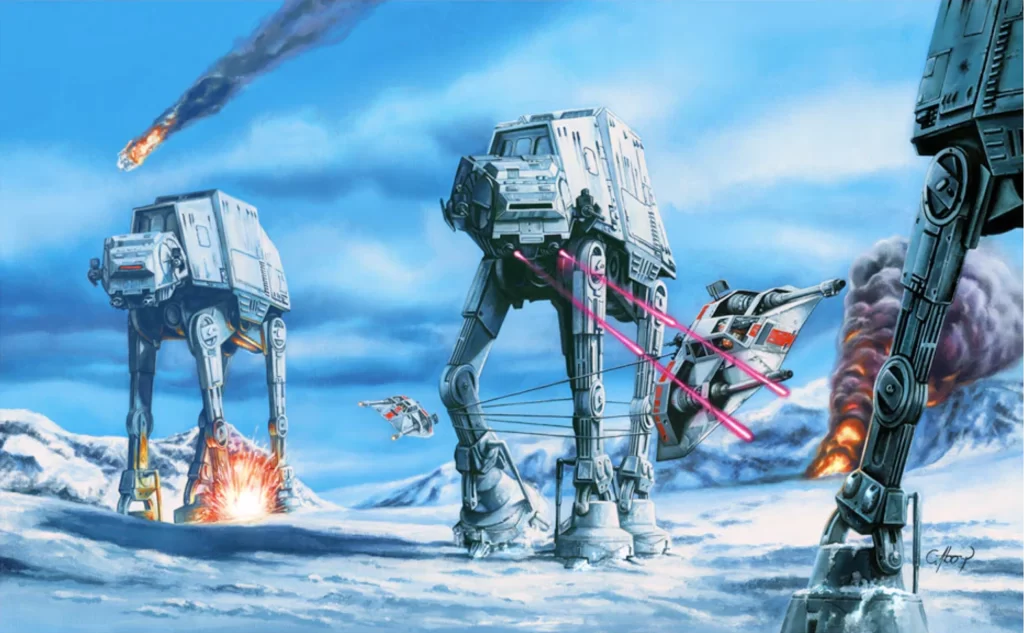
- The Empire feels like it has weight. Walkers are threatening. Infantry is stubborn.
- The Rebels feel scrappy and mobile. Snowspeeders can be clutch, but they’re not a free win.
- Probe droids show up as annoying little problems you can’t ignore for free.
It’s not “deep asymmetry,” but it clears the bar where it needs to: you feel like Rebels and Empire play differently, even though they’re both living inside the same clean system.
Scenarios and campaigns: variety, plus a longer arc when you want it
This is a scenario-driven box, and that’s the correct call. You get 17 missions, and the game also supports longer-form play via campaigns that add continuity and branching structure.
The standalone scenarios do what they need to do: get you fighting quickly, with setup differences and special rules that shift the feel. Some will be more “pitched battle,” some will push different objectives. Don’t expect every scenario to feel like a completely new game, but do expect enough variety to keep the box alive.
The campaign play is where the system gets extra legs. It adds context and progression without turning the rules into a novel. It’s a nice middle ground: more meaning than one-off skirmishes, less commitment than a 40-hour campaign game.
There’s also an official scenario editor floating around, which is great if you’re the type who enjoys making your own problems and then forcing your friends to play them.
Leader cards: easy variety, optional spice
Battle of Hoth includes optional leaders. The way it’s implemented is clean: pick a leader, shuffle their special cards into your deck, and now you’ve got a few unique plays that can swing moments or change your priorities.
This is smart for mixed groups. You can keep the base game simple for newer players, then add leaders once everyone’s comfortable. It increases replayability without bloating the rules.
Player count: it says 2–4, but it’s really a 2-player duel
Yes, the box says 2–4 players. In practice, it’s at its best as a two-player game: one Rebel commander, one Imperial commander.
The 3–4 player mode splits each side between two people. That can work as a teaching tool for kids or brand-new players, but for most adult groups it tends to feel slower and less decisive. There’s just not enough space and depth for two people to “share” a side and still feel like they’re making sharp tactical choices every turn.
If you buy it, buy it for the duel.
Verdict: a clean entry wargame with big moments and small rules
Star Wars: Battle of Hoth succeeds because it knows what it is. It’s a fast, approachable, dice-forward battle game that gets you into the action quickly. The command-card system creates tension with almost no overhead. The theme lands. The scenarios and campaigns keep it from being a one-night novelty.
Just don’t buy it expecting tight, low-luck competitive play. Buy it if you want a dramatic Hoth fight you can teach in one sitting, then immediately run back because the first game ended on a single brutal roll.
If that sounds like your kind of fun, this one will hit the table a lot.