
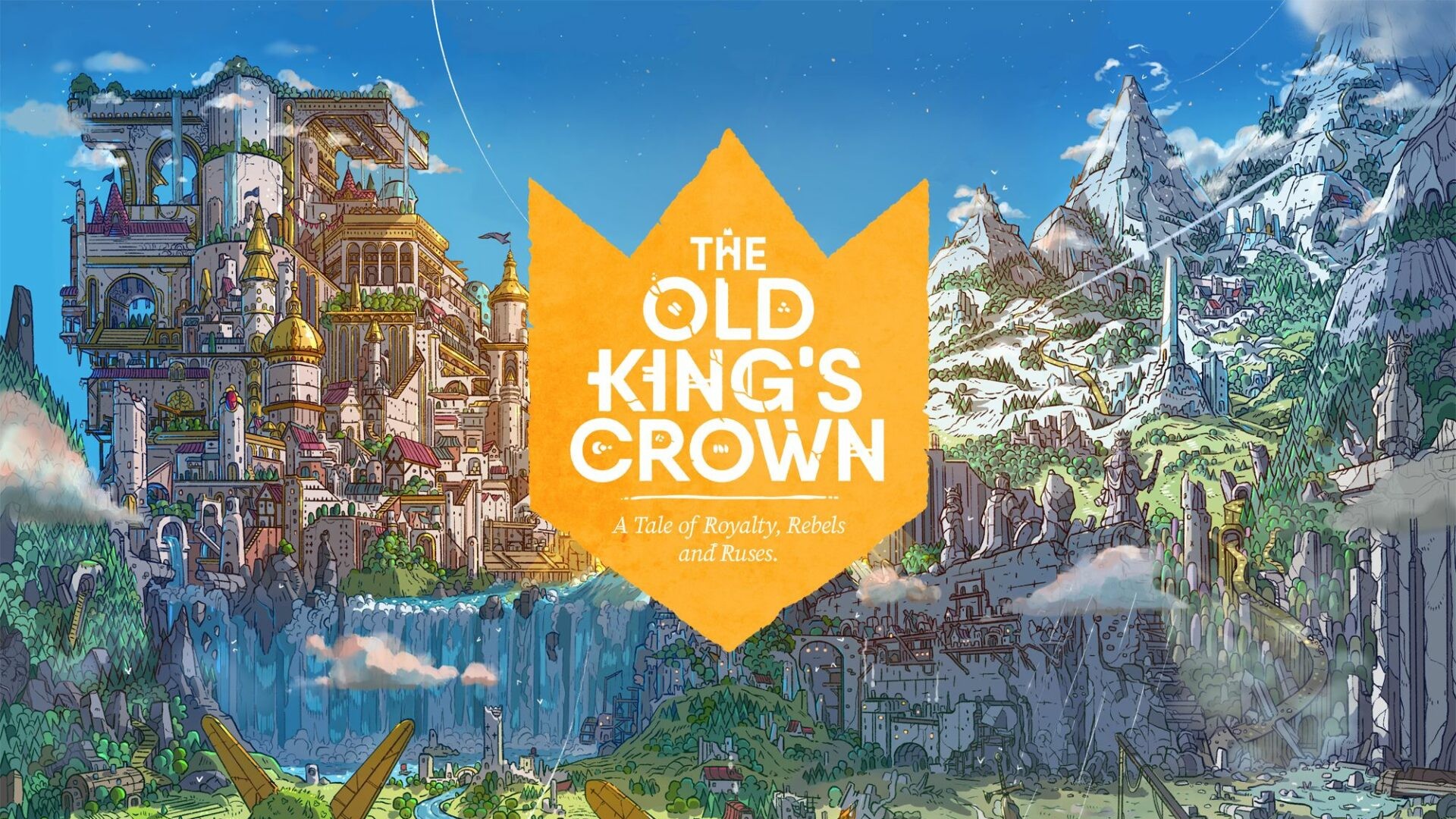
I went into The Old King’s Crown board game review expecting a pretty box and a mildly dramatic struggle for power. What I found instead is a crunchy, card-driven knife fight dressed up like a storybook, where “oops” decisions linger for rounds and your friends learn new ways to lie with a straight face. It’s asymmetric factions, strategic bidding, hand management, and bluffing, all stapled to a seasonal structure that keeps shoving you into trouble whether you feel ready or not.
If your group likes games where the table goes quiet, everyone leans in, and someone mutters “wait, can you do that?” at least once per clash, you’re in the right kingdom.
What is The Old King’s Crown, really?
At its core, this is a card-driven conquest game about influence. You’re one of four factions (The Clans, Nobility, Gathering, Uprising) trying to finish the game with the most Influence in your supply. The “war” happens across a map split into three Regions, and every round forces conflicts there. You don’t get to turtle forever. The game politely hands you a crown-shaped problem and says, “solve it, or be solved.”
The most important vibe to understand before buying: this is not a cozy optimization euro. It’s a tense, information-rich tactics puzzle that also rewards social reads. Sometimes the best play is math. Sometimes it’s watching someone’s eyebrows when they say, “i’m definitely not doing anything nasty here.”
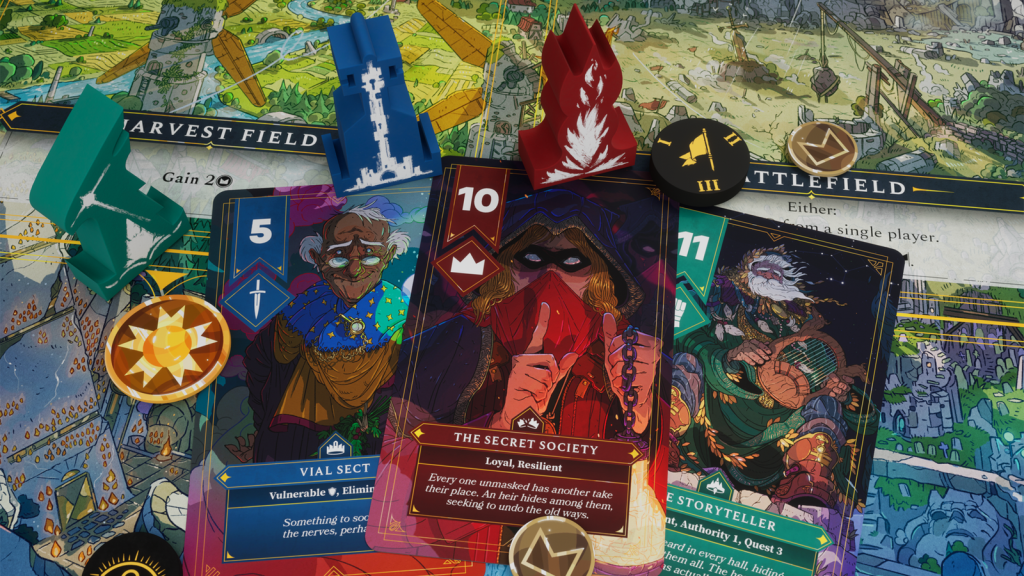
Table presence and components
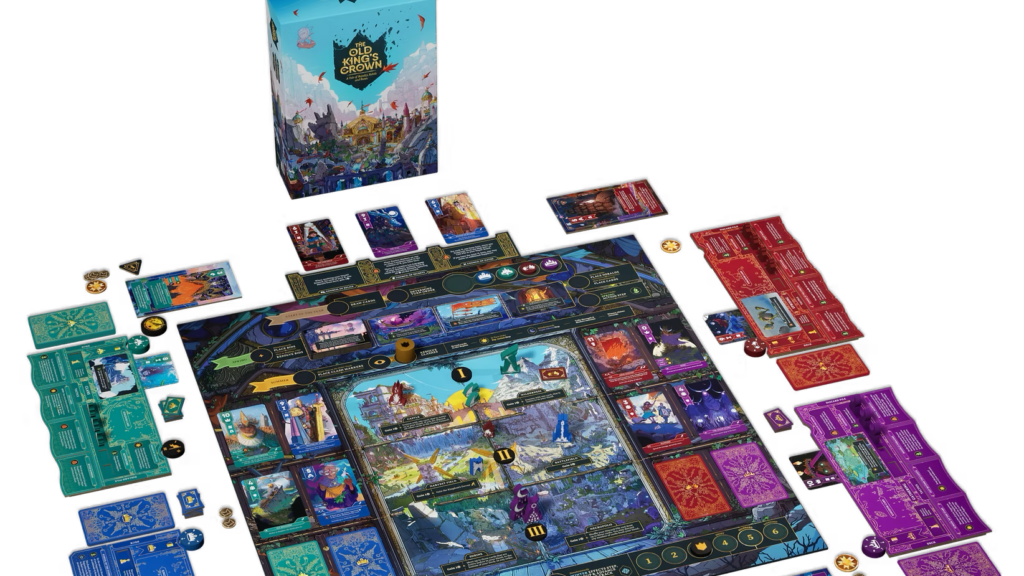
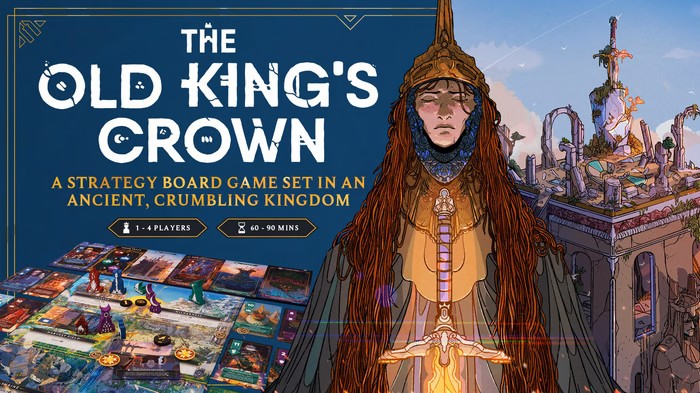
Even without hyping it up, it’s clear the production aims for “looming fantasy artifact on your table.” There’s a big central kingdom board, faction boards, stacks of cards (including Kingdom cards), and a bunch of markers and tokens that track order, seasons, influence, and more.
A detail I like is that the structure is visible. The board and markers help keep you oriented as you move through the year. That matters because the game’s real weight is not “how do i take a turn,” it’s “how many consequences did i just set in motion.”
How a round works (and why it stays tense)
The standard game is five rounds, and each round is basically a year. You progress through phases tied to the seasons, with a season marker walking you through the sequence. There are also official options for a shorter four-round game or an extended six-round one, if your group loves pain or hates joy. Either way, the clock is always ticking.
The big battles happen in Summer, when you resolve clashes across three Regions:
- Highlands (Castle and Wilderness)
- Plateau (Harvest Field and Battlefield)
- Lowlands (Shrine and Necropolis)
Players commit cards face down, supporters back them up, then you reveal and resolve. And this is where the game earns its reputation. Because raw strength totals are only the start.
The real spice is the set of Commands that can twist a clash: Ambush, Retreat, Flank, Rally, Deploy, Deadly. This is the part where the game stops being “highest number wins” and becomes “highest number wins unless someone set the rules on fire, moved the fight, and then assassinated your best card.”
It’s not chaos, though. It’s sharp. Timing windows matter. What’s active matters. And once your group internalizes the rhythm, the mind games get cleaner and meaner.
https://gamefound.com/en/projects/eerie-idol-games/the-old-kings-crown
The Lost Pile and the “attrition tax”
Here’s the hook that made me grin, because it’s so rude in a disciplined way.
Cards can be eliminated and sent to the Lost Pile, and that can be functionally permanent pressure on your options. Your deck and hand are not infinite comfort blankets. If you’re forced to draw and can’t, you incur Attrition. So the game quietly teaches you to respect your own resources while you’re busy trying to ruin everyone else’s.
This is also where the bluffing gets teeth. You can’t just “always play safe” because safe is predictable. And predictable is how you get farmed for influence.
If you come from Magic, think of it like sitting down with a new rules-heavy commander pod. You can memorize lines all day, but if you ignore human behavior you still get wrecked. (Also, if you want a quick palate cleanser from all this icon timing, here’s a simpler rules rabbit hole: How Does Protection Work in MTG.)
Asymmetric factions without a million special cases
The factions have different identities and tools, but the game still feels like one cohesive system instead of four unrelated mini-games crammed into the same box. That’s harder than it looks.
You’ll feel the asymmetry most as you layer in faction-specific abilities, your choices of upgrades, and the long-term placement stuff (like councils). And you can absolutely win by leaning into a faction’s “style,” but you’re rarely locked into one script. The kingdom changes, opponents adapt, and your hand forces compromises.
It’s the good kind of asymmetry: the kind where you lose a clash and immediately think, “yeah, ok, that was on me,” instead of “cool, i guess their faction just does that.”
Solo mode and why it matters
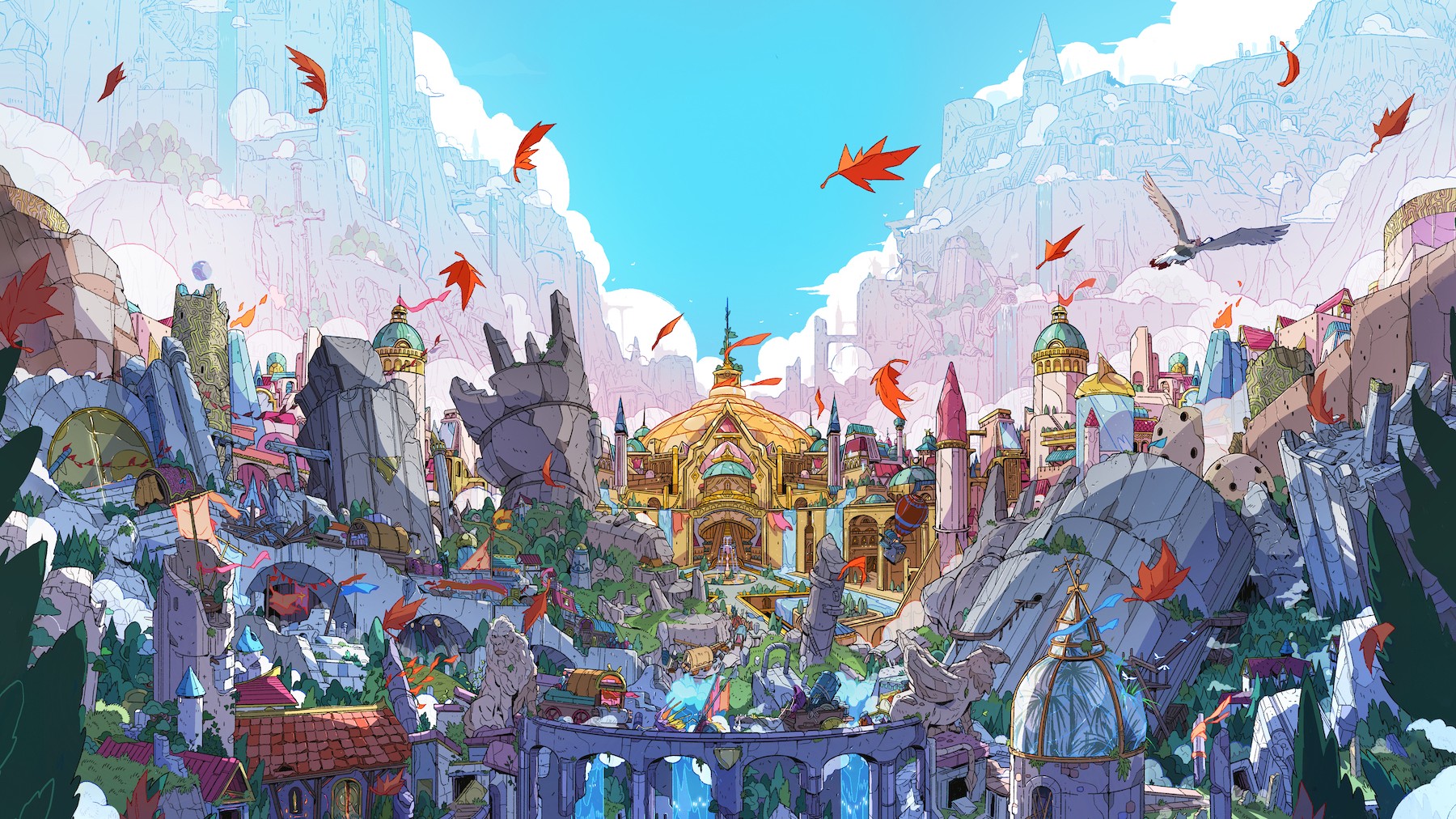
The game supports solo play with an automated opponent called the Simulacrum. From what’s been shown and discussed publicly, solo looks like it’s built to preserve the same core tension: committed cards, misdirection, and the constant push-pull over regions. There are also difficulty knobs, which is usually the difference between “solo included” and “solo worth playing.”
If you’re the type who buys big strategy boxes and then can’t get your group to schedule anything until 2027, solo support is not a bonus feature. It’s how the game actually gets played.
Who this is for (and who should skip it)
You’ll probably love The Old King’s Crown if:
- you like high interaction and can handle being targeted
- you enjoy bluffing that actually affects the game state
- you don’t mind learning iconography and timing
- you want a game that gets better as your group plays it more
You should probably skip if:
- your group hates take-that moments (this game has polite ones and brutal ones)
- you want low rules overhead
- you get annoyed when a single clever command swings a whole clash
- you’re looking for a chill fantasy adventure instead of a political scrap
Verdict
This The Old King’s Crown board game review boils down to one thing: it’s a deep, structured tactics game that’s willing to let social play matter. It rewards repeat plays, shared table knowledge, and the slow evolution of rivalries. It also demands attention. If your group bounces off dense systems, this will feel like homework with nicer art.
But if your group likes learning a system and then using it to outplay each other, it’s the kind of box that can live on the table for weeks.
Rating: 8.8/10
Brilliant design tension, heavy cognitive load, and zero interest in being polite.
https://boardgamegeek.com/boardgame/357873/the-old-kings-crown