
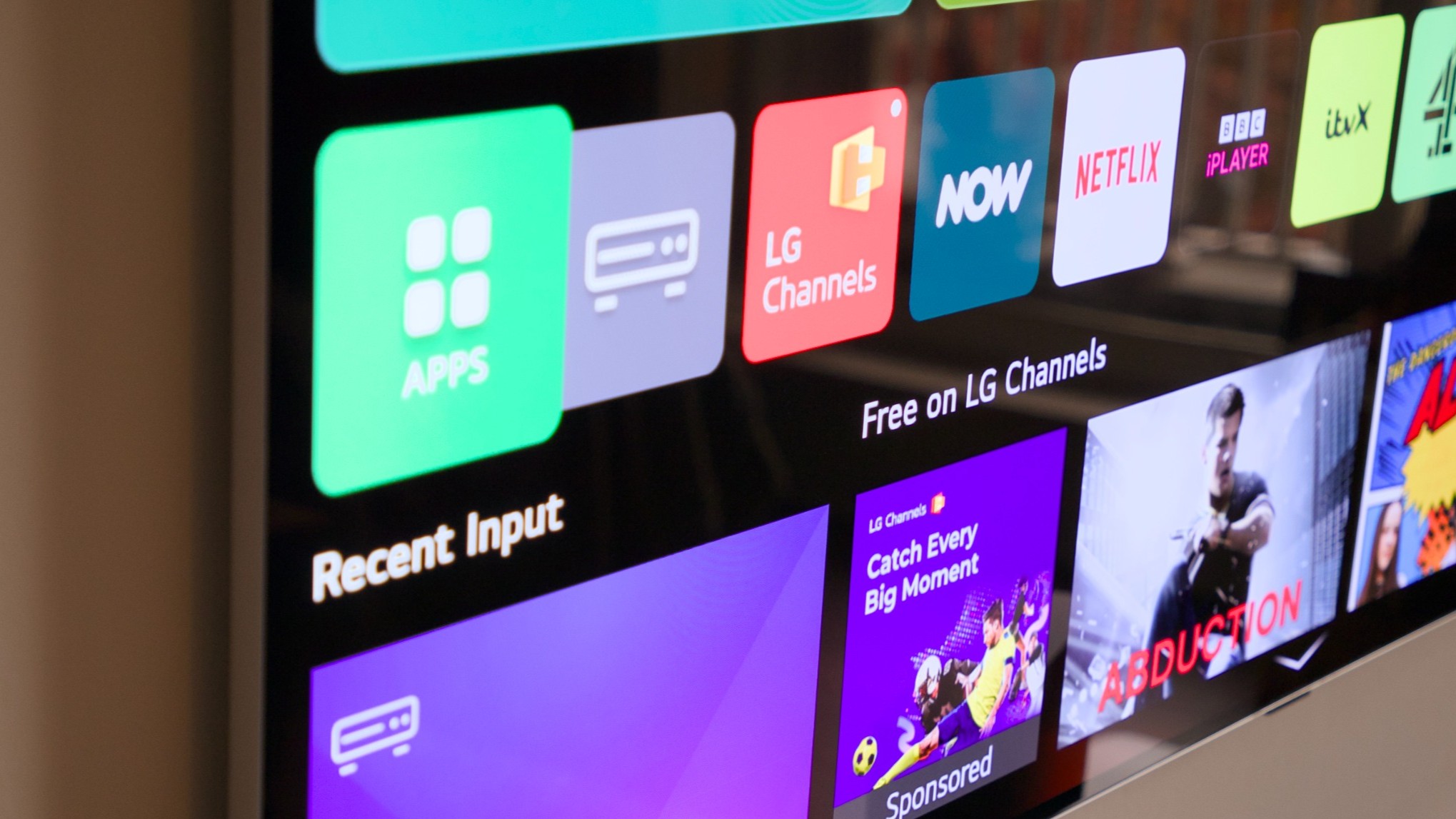
TLDR: In my view, LG has earned the description “scummy corporation” through years of privacy-invasive behavior, aggressive advertising, Automatic Content Recognition, data monetization and a stunning attitude toward the televisions people already paid for. LG now insists that its current ACR and advertising systems are opt-in, and that its televisions do not continuously record household conversations. But even LG’s own description confirms that viewing information can feed audience segmentation, cross-device advertising and data-sharing arrangements that may legally qualify as the “sale” or “sharing” of personal information.
There is something deeply rotten about paying thousands of dollars for a television and then discovering that the company that sold it to you still sees the screen hanging on your wall as a source of advertising inventory and commercially valuable behavioral data.
That is where I am with LG.
I think LG has behaved like an absolutely scummy corporation, and what bothers me most is that we don’t have to invent some conspiracy theory to reach that conclusion. LG’s own advertising division has spent years bragging about the value of data coming directly from its televisions. Its technology pages tell advertisers they can target audiences based on what people watch, the apps and services they use, their exposure to particular advertisements, gaming activity, viewing habits and even location. LG Ad Solutions describes that information as first-party data collected “at the glass level.”
That phrase matters, because LG executives and advertising people keep returning to the idea of controlling the “glass.” One LG advertising executive has described the advantages of working with an OEM such as LG as having first-party inventory and data from the same provider, combined with control over the television environment. LG Ad Solutions has even used the phrase “direct to glass” to market this relationship to advertisers.
Gamers Nexus’ recent investigation puts an uglier phrase on the same mentality: “We own the glass.”
That may be advertising-industry jargon, not a literal assertion that LG holds the title to the television sitting in your house. But it perfectly captures what I find so repulsive about the company’s approach. You may have paid for the television, mounted it to your wall and supplied its internet connection, yet LG’s advertising machine continues to see that glass as a commercial asset.
That attitude alone should make consumers furious.
LG’s Television Business Has Become a Data Business
The easiest way to understand LG’s privacy problem is to stop thinking about LG as merely a company that sells televisions.
LG also operates an advertising and data business.
Its advertising subsidiary, LG Ad Solutions, doesn’t hide this. It advertises Automatic Content Recognition data as a powerful way to understand what television viewers actually do. Its current marketing material says that its ACR data can identify behavior involving linear television, streaming, movies, advertisements and gaming content displayed on LG televisions. Advertisers can use the resulting data products to segment people based on viewing habits, specific apps and services, exposure to competitors’ ads, gaming platforms, subscriptions and location.
Read that again and forget the sanitized advertising vocabulary for a moment.
Your television isn’t just displaying media.
It can also become a sensor for understanding the media behavior of the household watching it.
LG Ad Solutions has been remarkably candid about how commercially useful this is. In 2025, the company announced a partnership designed to make its ACR dataset easier for brands, agencies, television networks and measurement companies to access and combine with their own first-party information. LG described the partnership as providing access to its global viewership dataset through Databricks.
Another LG Ad Solutions partnership said advertisers could use ACR information for planning, activation, measurement and analytics. In that agreement, audience-level information from opted-in LG televisions was made available across Magnite’s advertising platform.
And back in 2021, iSpot announced a licensing deal giving it access to smart-TV data from more than 20 million opted-in TVs supplied through LG Ad Solutions.
So when I say LG is willing to monetize what its televisions learn about viewers, that is not rhetorical speculation.
It is a business.
LG Itself Admits Some Data Sharing Can Legally Count as a “Sale”
This is where LG’s own September 2026 defense becomes particularly interesting.
After Gamers Nexus published its investigation, LG responded by arguing that some reporting had created misconceptions. The company says Automatic Content Recognition, voice recognition and interest-based advertising are optional and off by default. It says ACR uses audio fingerprinting rather than screenshots or recordings, and users can withdraw consent.
Those distinctions should be reported accurately.
But then LG says something that should make privacy-conscious customers pay very close attention.
LG acknowledges that, depending on the market, agreements and user choices, ACR-related viewing information can be shared with LG Ad Solutions for audience segmentation and viewing analysis. LG further acknowledges that some ACR-related information may be shared in ways that qualify as the “sale” or “sharing” of personal information under applicable privacy laws.
That’s LG talking.
Not Gamers Nexus.
Not some angry Reddit poster.
Not me.
LG.
Now, LG emphasizes that these services require the relevant consent and that consumers can exercise opt-out rights. Fine. That addresses an important legal and technical question.
It doesn’t address my moral objection.
Why should my television have been designed as an input into this advertising-data machine at all?
Why should the manufacturer of a physical display be building commercially useful audience profiles out of what appears on that display?
Why are consumers expected to dig through user agreements and privacy settings to stop the company that made their television from extracting additional economic value from their behavior?
That entire relationship feels backwards.
The Commercialization Is Very Real
The reality is more corporate and, in some ways, more disturbing.
LG builds or obtains large-scale viewing datasets and audience segments. Those datasets can then become useful to advertisers, measurement companies, advertising platforms, agencies and other data partners. LG Ad Solutions licenses data, provides access to it, integrates it into advertising platforms and promotes its ability to help marketers combine television behavior with other first-party datasets.
So “selling us to the highest bidder” is an angry shorthand for something more complicated: LG has built a commercial ecosystem in which information derived from televisions in people’s homes has economic value to companies trying to analyze and target those people.
I find that disgusting.
A television should not be a behavioral-data terminal.
The Texas Attorney General Apparently Had Enough Too
This isn’t only a philosophical disagreement about privacy.
In May 2026, Texas Attorney General Ken Paxton announced a settlement with LG involving its Automatic Content Recognition practices. According to the Attorney General’s office, the agreement requires LG not to collect Texans’ viewing data through ACR without informed consent, to provide clearer disclosures and to give users an easy way to opt out.
The allegations leading into that dispute were brutal.
The Texas action accused LG of monitoring what consumers watched across streaming services, cable and connected devices and using that information to build behavioral profiles for commercial purposes. Our saved project research captured the same allegations while reviewing the case, including the Attorney General’s claim that this was deliberate data harvesting rather than an accidental byproduct of operating the television.
LG’s present-day position is that current ACR functionality is opt-in and that its implementation uses audio fingerprinting rather than screenshots. That response matters because some earlier descriptions of ACR technology discussed screenshot-based recognition, while LG says that description does not accurately characterize its current system.
But notice what isn’t really disputed: the television can generate commercially useful viewing information, LG has an advertising business built around ACR data, and the company had to enter a settlement governing consent around that collection.
That is bad enough.
LG Has Been Caught Crossing the Opt-Out Line Before
And LG doesn’t exactly have a spotless history that earns unlimited trust.
Our project research goes back to the notorious 2013 LG smart-TV privacy controversy. An independent researcher discovered viewing information being transmitted from his LG television and reported that information continued leaving the device even after he disabled the relevant collection option.
This isn’t merely the researcher’s characterization of what happened.
LG eventually acknowledged the problem.
The statement preserved in our project source says LG had verified that viewing information continued to be transmitted even when the function had been turned off by viewers. LG said the information wasn’t retained by the server and promised a firmware update so that no information would be transmitted after the feature was disabled.
That happened more than a decade ago.
For me, it is important context when LG now asks customers to trust increasingly sophisticated viewing-data, advertising and AI systems.
Companies can fix bugs. Practices can change. Current LG systems should be judged on current evidence.
But trust is cumulative.
When a company once had to admit that the television kept transmitting viewing information after the customer explicitly turned that collection off, the company doesn’t get to act shocked when people approach the next generation of tracking technology with suspicion.
Now LG Wants to Turn Your Idle Television Into an Advertisement
The surveillance economy would already be irritating enough.
LG also apparently cannot resist turning more of the television itself into advertising inventory.
In 2024, LG introduced advertisements into smart-TV screensavers. According to Ars Technica, the feature was enabled by default on the tested television, although owners could turn it off. LG Ad Solutions described idle screen time as a “valuable engagement opportunity.”
That phrase is corporate brain rot distilled into three words.
Your television is sitting idle.
You bought it.
It is inside your home.
Nothing needs to be “engaged.”
But LG’s advertising division looks at a screen doing nothing and apparently sees wasted inventory.
This is exactly what I mean when I call the company scummy. It is the relentless refusal to accept that there should be a point where the transaction ends.
You bought the hardware.
LG got paid.
That should have been enough.
Instead, the customer remains economically useful long after checkout.
LG’s Privacy Policy Is Not Exactly Comforting
LG’s broader privacy documentation does little to make this model more appealing.
The company’s privacy materials explain that information can be shared with affiliates, service providers, advertising partners and business and marketing partners. Its U.S. privacy documentation also discusses categories of information that may be sold or shared under applicable state privacy-law definitions, including device data, online activity information, profile information and other derived data.
LG says it does not necessarily “sell” personal information for money in the everyday sense people normally associate with that word, and privacy laws use broader definitions of sale and sharing.
Fair enough.
But again, step away from the legal terminology.
LG operates a massive advertising business.
Its TVs generate commercially useful information.
Its ad business gives marketers tools for finding particular audiences.
Its partners can combine television information with other datasets.
LG’s own privacy statement acknowledges that ACR-related information may be shared in legally recognized sale/sharing arrangements.
At what point are consumers allowed to say, “I don’t give a damn what technical vocabulary your lawyers prefer. I don’t want my television involved in this business at all”?
That is where I am.
The Voice Terms Are Another Reason LG Deserves Scrutiny
The voice issue needs careful wording because there has been a lot of overheated reporting.
LG says its smart TVs do not continuously record or transmit household conversations. According to the company, supported wake-word detection is processed locally, and speech-to-text begins only after an intentional voice interaction. LG says ambient audio isn’t later uploaded when an offline television reconnects.
That is LG’s current position and it should not be misrepresented.
At the same time, our project material documented criticism of LG’s AI-service terms, including language placing responsibility on owners to obtain necessary consent from third parties whose voices may be captured and to notify household members and guests that their voices may be processed.
Gamers Nexus understandably looked at language like that and asked what the hell an ordinary television owner is supposed to do with it.
Do you give guests a privacy briefing when they enter the living room?
Do you point at the television and announce that everyone should review LG’s AI agreements before sitting down?
Maybe LG’s technical explanation narrows the circumstances in which voice information is actually processed. Good.
But the entire situation remains ridiculous.
I should not need to think this hard about the microphone inside my television.
And Then There Is the Security Problem
Privacy is only half the problem with turning a television into a networked computer.
The other half is security.
Bitdefender researchers disclosed several vulnerabilities in LG webOS in 2024. They reported that the flaws affected webOS versions 4 through 7 and could be combined to bypass authorization and gain root access to a television. Bitdefender also found more than 91,000 devices exposing a service to the internet that was intended primarily for local-network access. LG ultimately issued patches before Bitdefender publicly disclosed the vulnerabilities.
Credit where it is due: LG fixed the reported flaws.
But I don’t find the broader situation reassuring.
We keep stuffing televisions with microphones, network discovery, accounts, applications, advertising frameworks, telemetry and increasingly complex operating systems. Then we discover vulnerabilities that can provide deep control over those systems.
Gamers Nexus’ 2026 investigation went substantially further, reporting additional security flaws and demonstrating why a compromised microphone-equipped television can become a serious surveillance problem. LG disputes significant parts of the broader reporting around its native privacy behavior and says it operates security-testing and bug-bounty programs.
But even if you give LG every possible benefit of the doubt about its own intentions, a poorly secured smart television filled with sensors is still a security problem.
The attack surface exists because the complexity exists.
LG’s Own Advertising Material Is the Part I Can’t Get Past
Corporate privacy statements are carefully written.
Advertising material is often much more revealing because the company is speaking to the people it wants to pay it.
LG Ad Solutions tells marketers it can identify audiences based on television programs, apps, services and genres. It advertises ad-exposure targeting. It advertises the ability to find gamers by platform, studio, brand, title and console. It describes targeting based on viewing habits and location.
Another LG announcement described ACR as allowing advertisers to understand which households are underexposed or overexposed to a campaign, which households have seen competitors’ advertisements, and which households an advertiser is missing altogether.
That tells me everything I need to know about the commercial incentive.
LG doesn’t merely tolerate the existence of television viewing data.
It considers that data valuable.
It has built products around it.
It has built partnerships around it.
It markets it.
And it has an entire advertising subsidiary whose reason for existing is to help businesses extract value from the relationship between television screens and the people sitting in front of them.
That is why I don’t buy the comforting language about making television experiences more “personalized.”
The advertiser is the customer too.
A Television Company Shouldn’t Need a “Do Not Sell” Button
One of the funniest and saddest details in LG’s September 2026 privacy statement is that LG specifically mentions consumers exercising rights such as “Do Not Sell” requests in relation to ACR collection.
Just think about that sentence in context.
We’re talking about a television.
A TV.
Something you buy because you would like to watch a movie.
Yet by 2026, we have reached a point where the privacy discussion surrounding that appliance includes ACR consent, cross-device advertising, audience segmentation, advertising IDs, third-party processors and “Do Not Sell” requests.
And somehow consumers are expected to treat this as normal technological progress.
I don’t.
I think we’ve allowed corporations to redefine ownership in a way that overwhelmingly benefits them.
LG Makes Great Panels. That Doesn’t Excuse Any of This.
This is the frustrating part.
LG is perfectly capable of making excellent television hardware.
Its OLEDs can be gorgeous. Its gaming features are competitive. Its panels have pushed the television market forward in meaningful ways.
None of that gives LG a moral credit that it can exchange for privacy intrusions.
If anything, LG’s hardware quality makes its choices more irritating because the company could simply be good at its actual job.
Make an incredible display.
Give it excellent image processing.
Give it good HDMI support.
Update the firmware.
Fix security problems.
Then leave the customer the hell alone.
Instead, LG appears determined to transform the television into one component of a larger advertising and data ecosystem.
I don’t care how beautiful the black levels are. I shouldn’t have to negotiate with an advertising company every time I buy a screen.
This Is Why I Think LG Deserves a Boycott
I do not believe consumers should reward this business model.
If you already own an LG television, throwing it into a landfill would accomplish nothing. Keep it. Lock down the privacy settings. Disable ACR and optional viewing-data agreements. Turn off personalized advertising. Disable microphones and voice features you don’t use. Disconnect the television from the internet entirely if you are comfortable using an external streaming box.
Our saved project research reached essentially the same practical conclusion. After reviewing LG’s advertising practices, privacy history and user agreements, Gamers Nexus recommended avoiding LG displays and suggested disconnecting existing LG televisions from the internet where possible.
But when it’s time to buy the next television, I think consumers should remember all of this.
Remember the viewing data.
Remember ACR.
Remember the Texas settlement.
Remember the old case where LG acknowledged that viewing information continued transmitting after the user turned the function off.
Remember the screensaver ads.
Remember the “direct to glass” advertising strategy.
Remember that LG Ad Solutions openly tells advertisers how valuable television-level behavioral data can be.
Then decide whether this is a company you want to reward with another few thousand dollars.
My answer is no.
LG’s Biggest Mistake Was Showing Us What It Thinks the Television Is
Maybe that’s what bothers me most.
I think of a television as something I own.
LG’s advertising business appears to see something else: a glass surface, an audience endpoint, a source of first-party data and a way to connect advertisers with households.
Those are fundamentally different visions of the same object.
And they expose the larger sickness infecting modern consumer electronics. Companies increasingly hate the idea that the customer can simply purchase a product and walk away. They want accounts, subscriptions, analytics, engagement, advertising, behavioral information and a continuing economic relationship.
Enough.
I paid for the television.
You got your money.
You do not need my viewing habits too.
You do not need to know which console I use.
You do not need to know which advertisements reached my household.
You do not need to turn my idle screen into an advertising placement.
You do not need to build cross-device advertising products around my living room.
And I sure as hell don’t want a corporation that talks to advertisers about controlling the “glass” pretending that all of this exists primarily for my benefit.
In my opinion, LG has behaved like a scummy, privacy-hostile corporation that has become far too comfortable treating customers’ televisions and viewing behavior as business assets.
The most effective response isn’t another angry privacy-setting change.
It’s making that behavior cost them money.
Don’t throw away the LG television you already own. Lock it down and get every useful year out of it.
But when you replace it, buy something else and tell LG exactly why.
FAQs
Does LG literally sell my individual TV history to the highest bidder?
There is no evidence I found of a literal auction in which individual customer histories go to whoever bids the most. The documented model is more sophisticated: LG Ad Solutions provides, licenses and integrates audience-level ACR data and advertising capabilities with marketers, measurement companies and data partners. LG itself acknowledges that some ACR-related information may be shared in ways that legally constitute a “sale” or “sharing” of personal information.
Does LG say its TVs continuously record conversations?
No. LG explicitly denies that claim. It says current televisions do not continuously record or transmit household conversations and that wake-word detection happens locally until an intentional voice interaction begins. That should be distinguished from separate concerns about security vulnerabilities, voice-session processing and LG’s AI-service terms.
Can LG’s tracking features be disabled?
LG says ACR, voice recognition and interest-based advertising are optional and can be disabled or declined. Current LG support documentation also says agreements covering viewing information, voice functionality and personalized advertisements are optional.
Why criticize LG if other smart-TV companies use ACR too?
Other manufacturers have faced similar criticism, and the Texas Attorney General has investigated multiple major television companies. That doesn’t absolve LG. This article is about LG because its advertising business, privacy history and recent scrutiny provide an unusually clear example of how the modern smart-TV business model works.
References
- LG Electronics, “Understanding Privacy on LG Smart TVs,” September 12, 2026. LG’s response describing ACR, voice recognition, advertising consent and data-sharing practices.
- Texas Attorney General, LG privacy settlement, May 11, 2026. Agreement addressing informed consent for ACR viewing-data collection.
- LG Ad Solutions, ACR Technology. LG’s own description of its viewing-data and audience-targeting capabilities.
- LG Ad Solutions / Databricks partnership. Describes access to LG’s ACR viewership dataset for data partners.
- LG Ad Solutions / Magnite partnership. Describes audience-level ACR data made available for advertising planning and measurement.
- LG Ad Solutions / iSpot partnership. Describes a multi-year licensing agreement involving smart-TV data.
- Bitdefender, “Vulnerabilities Identified in LG WebOS.” Technical disclosure covering authorization bypass and root-access vulnerabilities.
- Ars Technica, “LG TVs Start Showing Ads on Screensavers.” Reporting on LG’s 2024 screensaver advertising rollout.
- Project research: Gamers Nexus transcript and supporting material. Includes LG’s historical acknowledgment of continued viewing-data transmission after an opt-out, discussion of LG’s AI terms and the Texas ACR allegations.