
Summoning sickness does not mean a permanent must sit uselessly for one full turn. It is shorthand for a narrower rule: a creature cannot attack or activate one of its own abilities with the tap symbol or untap symbol in the cost unless you have controlled that permanent continuously since the beginning of your most recent turn. Haste bypasses both restrictions.
That wording explains the cases that cause most arguments. A new creature can block. It can use abilities without the tap or untap symbol. It can be tapped to crew a Vehicle or pay for convoke. A permanent you have controlled since your turn began can become a creature and attack immediately. The game cares about continuous control of the permanent, not how long it has looked like a creature.
The actual summoning sickness rule
The current official Magic rules hub provides the Comprehensive Rules governing these interactions. Under those rules, the restriction applies when a permanent is currently a creature and you have not controlled it continuously since the start of your most recent turn. It limits two things:
- Declaring that creature as an attacker.
- Activating an ability of that creature when its activation cost contains the tap symbol, {T}, or untap symbol, {Q}.
Tapping a creature as it attacks is part of declaring attackers; it is not the payment of a {T} activation cost. The two restrictions are grouped together because they use the same continuous-control test, not because attacking is a tap ability.
There is no permanent “sick” marker to remove. The game checks the creature’s current characteristics, its control history and whether it has haste when you try to attack or activate the relevant ability.
| Situation | Can attack? | Can use its own {T}/{Q} ability? | What can it still do? |
|---|---|---|---|
| New creature without haste | No | No | Block, use eligible non-{T}/{Q} abilities, crew or help pay convoke |
| New creature with haste | Yes, if otherwise eligible | Yes, if other costs and timing permit | Act normally under the relevant rules |
| Flash creature cast during an opponent’s turn | Not during that opponent’s turn; normally yes on your next turn | Normally yes on your next turn | Block after it resolves if untapped and otherwise eligible |
| Creature you gained control of this turn, without haste | No | No | Block and perform actions not restricted by the rule |
| Older permanent that becomes a creature | Yes, if controlled since your turn began | Yes | Act as a creature without resetting its control history |
| New creature token without haste | No | No | The same permitted actions as any other new creature |
| Regular planeswalker | Not applicable while it is not a creature | Not applicable to loyalty abilities | Use a loyalty ability under the separate loyalty timing rules |
A new creature can be tapped—just not for every reason
The common shortcut “summoning-sick creatures cannot tap” is wrong. The rule stops the creature from activating its own ability when that ability’s cost contains {T} or {Q}. It does not create a protective bubble that prevents the permanent from becoming tapped.
An effect can tap a new creature. You can also tap it to pay another spell or ability’s cost when that cost is written as an instruction such as “Tap an untapped creature you control.” In that case, the creature is not activating its own tap ability.
Mana abilities on creatures are not exempt
A creature’s mana ability still obeys the restriction if its cost contains {T} or {Q}. A newly cast mana creature without haste therefore cannot use a “{T}: Add…” ability immediately. The fact that the ability produces mana does not override the continuous-control rule.
A noncreature mana rock can normally use its own {T} ability immediately because the restriction applies to creatures. If that same artifact is currently a creature, however, its {T} ability becomes restricted unless you have controlled the permanent since your turn began or it has haste.
Crew and convoke work differently
Crew is an ability of the Vehicle, and its cost taps other untapped creatures with enough total power. Those creatures are not activating abilities containing their own {T} symbols, so creatures that entered or came under your control this turn can help crew.
Convoke works on the same practical distinction. It allows you to tap untapped creatures to help pay a spell’s total cost, including creatures you have not controlled since the start of your turn.
The Lost Caverns of Ixalan release notes illustrate the wording with Goldfury Strider. Creatures and artifacts newly controlled that turn can be tapped for its “Tap two untapped artifacts and/or creatures you control” cost because the cost does not use the tap symbol.
The Vehicle itself has a separate control-history question once crew turns it into a creature. A Vehicle you have controlled since your turn began may attack after being crewed, even if the creatures used to crew it are new. A Vehicle that entered this turn generally cannot attack without haste, although it may block while untapped. The official Ixalan release notes confirm that a crewed Vehicle follows the normal rules for artifact creatures.
Flash changes timing; haste changes the restriction
Flash and haste solve different problems. Flash lets you cast a spell whenever you could cast an instant. It does not grant haste and does not directly bypass either summoning-sickness restriction.
Suppose you cast a flash creature during an opponent’s turn. If it resolves before blockers are declared, remains untapped and can otherwise block the attacker, it may block immediately. Blocking has no continuous-control requirement.
When your next turn begins, that creature is already under your control. You have therefore controlled it continuously since the beginning of that turn, so it can normally attack or use its own {T}/{Q} abilities. Flash has not removed summoning sickness; clever timing has allowed the permanent to satisfy the rule by the time you need it.
Haste is the direct exception. If a creature gains haste after entering or changing control, it may attack and use its own {T}/{Q} abilities from that point onward, assuming no other rule or effect prevents the action. If it later loses haste during the same turn, the normal continuous-control restriction matters again.
Entering, changing control and blinking
Tokens and creatures entering from other zones
Creature tokens follow exactly the same restriction as nontoken creatures. Unless a token has haste, it normally cannot attack or use its own {T}/{Q} ability during the turn it is created. It can still block, crew, convoke or use an eligible ability without those symbols.
It also does not matter whether a creature was cast. A creature put onto the battlefield from a graveyard, hand, library, exile or command zone has newly come under your control and normally faces the same restrictions. The rule follows battlefield control, not the route taken to get there.
Gaining control resets the relevant history
If you gain control of an opponent’s creature during your turn, you have not controlled it continuously since that turn began. It cannot attack or use its own {T}/{Q} abilities unless it has haste. It can still block later and perform actions outside the restriction.
A brief control change is enough to break continuous control. If you lose control of your creature and then regain it, its earlier time under your control does not bridge that gap. Conversely, a creature gained during an opponent’s turn can normally act on your following turn because you control it when that turn begins and continuously afterward.
Blink creates a new object
When a permanent leaves the battlefield and returns, the returned permanent is a new object with no memory of its previous battlefield existence. A blinked creature therefore cannot attack or activate its own {T}/{Q} abilities that turn without haste, even if you controlled the old object since long before the turn began.
Animated lands, artifacts and other permanents
Summoning sickness applies only while a permanent is a creature, but the control test examines how long you have controlled the permanent itself. It does not ask how long that permanent has had the creature type.
That creates two useful cases:
- If a land or artifact was under your control when your turn began, it can normally attack immediately after becoming a creature, provided it is untapped and otherwise eligible.
- If the permanent entered under your control this turn and then becomes a creature, it cannot attack or use its own {T}/{Q} abilities without haste.
A land played this turn can use a {T} mana ability while it is only a land because it is not a creature. If an effect turns it into a creature before you activate that ability, the restriction applies while it remains a creature. This is one of those places where order of operations stops being bookkeeping and starts being strategy.
Transforming, turning face up and merging do not reset the clock
Transforming or converting a double-faced permanent does not make it a new object. If you controlled the permanent continuously since your turn began, transforming it will not make it summoning sick. If it entered this turn, transforming it will not cure the problem either.
Turning a face-down permanent face up likewise does not cause it to leave and re-enter the battlefield. A face-down creature played this turn remains unable to attack without haste after being turned face up. One that has remained under your control since your turn began keeps that qualifying control history.
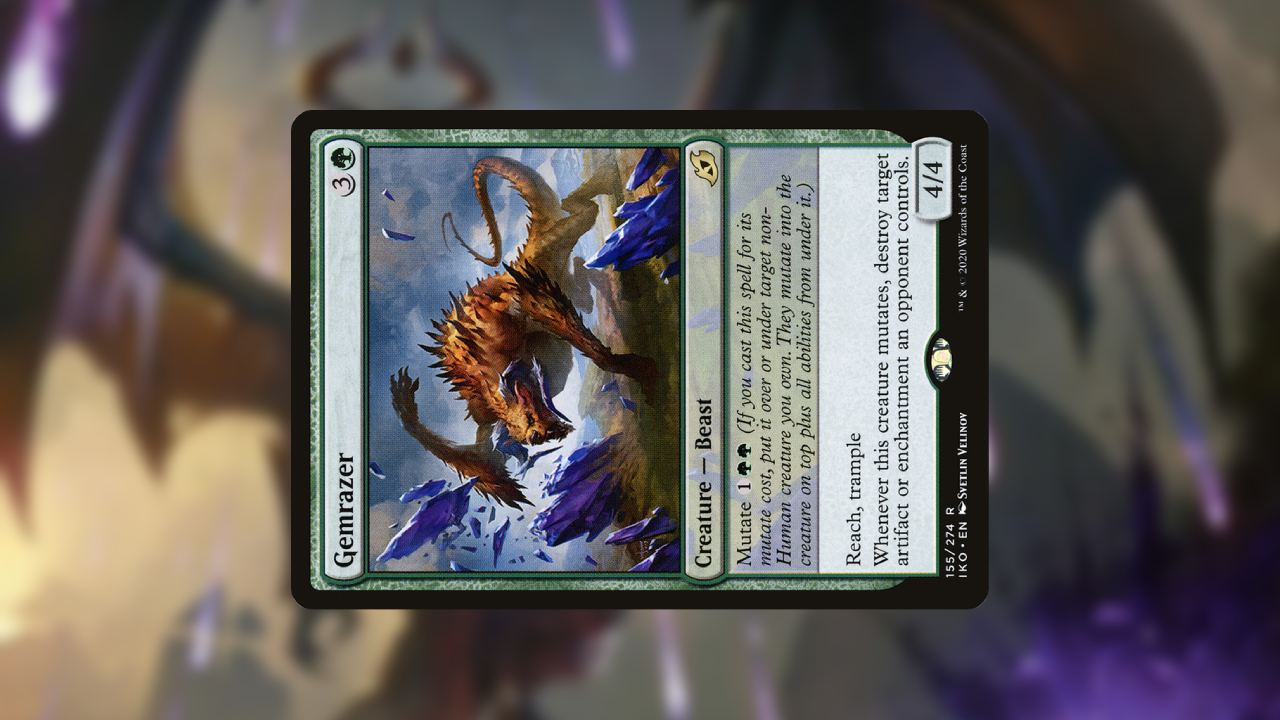
Mutate follows the history of the resulting merged permanent. Merging a mutating creature spell with a creature does not make the resulting permanent a newly entered object. If the original battlefield creature was ready to attack, the merged permanent normally remains ready; if the original creature was newly controlled, mutate does not make it ready.
Planeswalkers use two different rule systems
An ordinary planeswalker is not a creature, so summoning sickness does not stop it from activating a loyalty ability on the turn it enters. Loyalty abilities instead have their own restrictions: you normally activate one only during your main phase while the stack is empty, and only if none of that permanent’s loyalty abilities has been activated that turn.
If a planeswalker becomes a creature, separate the questions. To attack, it must have been under your control continuously since your turn began or have haste. Its loyalty abilities still follow loyalty timing and are not {T}/{Q} abilities. If the animated planeswalker has some other activated ability whose cost includes {T} or {Q}, that ability is restricted in the normal way while the permanent is a creature.
A creature can enter attacking without being declared
Some effects put a creature onto the battlefield attacking. That creature may be attacking even though it could not legally have been declared as an attacker, because the turn-based declaration restriction was never applied to it. It did not attack through haste; the effect placed it into combat already attacking.
This distinction can affect abilities that trigger when a creature attacks. Rules text may care whether a creature “attacks,” is “attacking,” or was “declared as an attacker,” so the exact wording of the effect still matters.
A quick test for any permanent
When a strange board state raises the question, run through this sequence:
- Is the permanent currently a creature? If not, the summoning-sickness restriction does not apply.
- Are you declaring it as an attacker or activating one of its own abilities with {T} or {Q} in the cost? If not, summoning sickness probably is not the relevant rule.
- Have you controlled that permanent continuously since the beginning of your most recent turn? If yes, it passes the control test.
- If not, does it currently have haste? If yes, haste supplies the exception.
- Finally, check ordinary requirements: Is it untapped? Is the timing legal? Can it pay every cost? Does another effect prohibit the action?
The cleanest mental model is not “new permanents must wait a turn.” It is “creatures need continuous control or haste for attacking and their own {T}/{Q} abilities.” Once that distinction is in place, flash creatures, mana dorks, Vehicles, animated lands and control-changing effects stop looking like unrelated exceptions and start behaving like parts of the same system.