
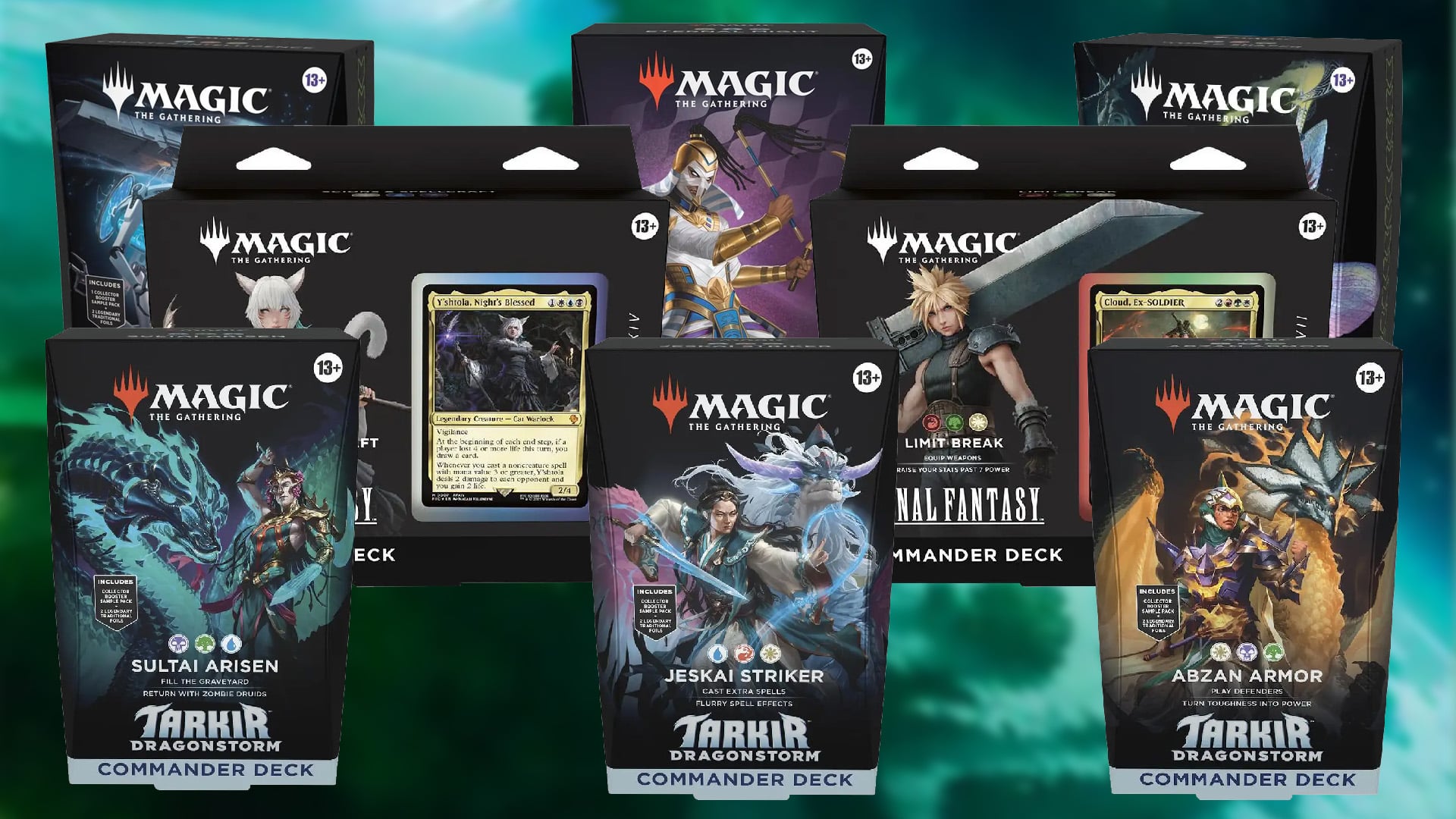
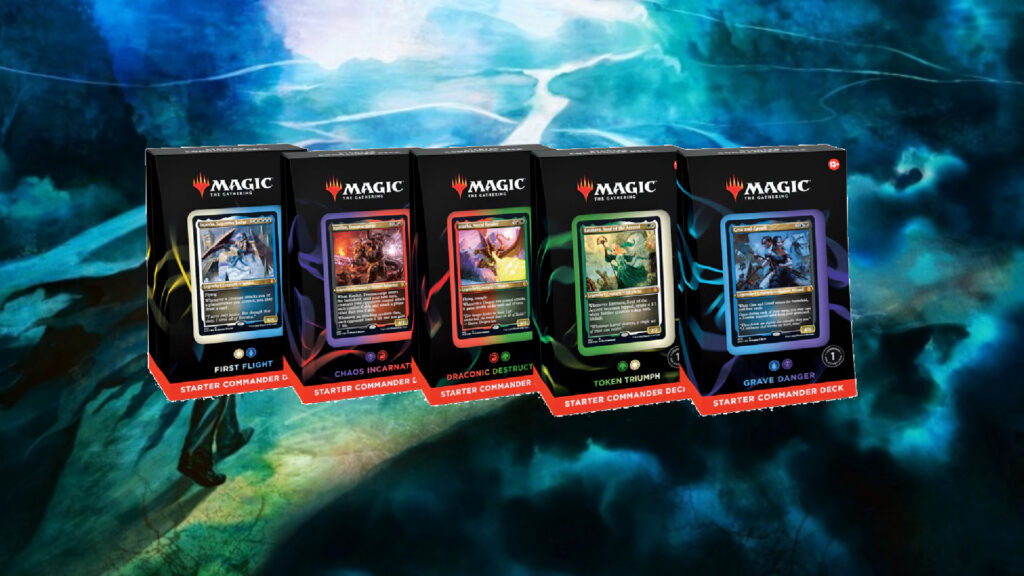
Commander precons are supposed to be simple: crack the box, sleeve it up, and play. But a handful of decks ended up being more than “just a starting point.” They shaped playgroups, pushed deckbuilding trends, and stayed relevant for years.
So here’s my take on the best 5 commander precons of all time. I’m ranking them by a mix of out-of-the-box performance, long-term upgrade potential, card quality (staples and reprints), and how often they still come up in Commander conversations today.
How I picked these decks
“Best” is subjective. Some people mean raw power. Others mean value. Others mean “this deck is fun every time.” I tried to balance all of that with a few practical filters:
- Out-of-the-box gameplan: Does it ramp, draw cards, and close games without needing a total rebuild?
- Commander impact: Is the face commander (or a commander option inside the box) still a real force in EDH?
- Staples and reprints: Does the list include cards you still want even if you take the deck apart?
- Upgrade path: Can you upgrade it without throwing away 70 cards?
- Legacy: Did it influence what players build, buy, and copy?
Quick note: I’m not focusing on “best precons you can buy today at MSRP.” Some of these are older, and the sealed price can be all over the place. This is more of an all-time list.
Here’s the shortlist we’re working with:
| Rank | Precon | Set | Colors | Face commander | What it’s known for |
|---|---|---|---|---|---|
| 1 | Breed Lethality | Commander 2016 | WU BG | Atraxa, Praetors’ Voice | Proliferate and counters, absurd commander ceiling |
| 2 | Vampiric Bloodlust | Commander 2017 | WBR | Edgar Markov | Eminence, vampire swarm, tribal dominance |
| 3 | Necron Dynasties | Warhammer 40,000 | B | Szarekh, the Silent King | Artifact recursion in mono-black, strong “box to table” play |
| 4 | Party Time | CLB Commander | WB | Nalia de’Arnise | Party mechanic plus premium staples, easy to pilot |
| 5 | Mind Seize | Commander 2013 | UBR | Jeleva, Nephalia’s Scourge | Iconic early precon, infamous demand, spell-based chaos/value |
If you’re the type who likes keeping your cards sorted by deck, color, or “do not trade” pile, labeling your deck boxes saves a lot of time. This guide can help even if it’s aimed at kids stuff: How to Create Labels for Kids.
1) Breed Lethality (Commander 2016)
Breed Lethality is the precon that made a whole generation of players say, “Wait, the commander does what… every turn?”
The face commander is Atraxa, Praetors’ Voice, and the deck is built around +1/+1 counters and proliferate. The key is that Atraxa doesn’t need much setup. You play creatures that pick up counters naturally, Atraxa proliferates at end step, and suddenly everything is bigger than it has any right to be.
This deck is also famous for how many different Atraxa builds it can become later. +1/+1 counters, Superfriends (planeswalkers), Infect, keyword counters, even “oops all sagas.” Atraxa is one of the most built commanders, which says a lot about staying power.
Why it’s an all-timer
- Atraxa is a “value engine” commander that asks very little from the 99 to be effective.
- The precon includes serious cards for the theme, like Deepglow Skate, Cathars’ Crusade, and counter support that still shows up in upgraded lists.
- Even outside Atraxa, the deck came with strong support legends that helped define counter strategies.
How it usually wins
- Build a board of creatures that grow via counters.
- Proliferate repeatedly until combat becomes unfair.
- Sometimes pivot into a more controlling game using the deck’s interaction suite.
Easy upgrade direction
You don’t need to reinvent anything. Most upgrades are just:
- Better mana base and fixing (this is the unglamorous part, but it matters).
- More repeatable proliferate.
- More efficient counter payoffs and protection.
And yes, when people talk about the best 5 commander precons of all time, this is usually the one that gets named first.
2) Vampiric Bloodlust (Commander 2017)
If Atraxa is the “quietly gets out of hand” precon, Vampiric Bloodlust is the “why do you already have 10 power on board?” precon.
This deck’s identity is Edgar Markov, and Edgar’s Eminence ability is the reason people still argue about whether Eminence was a design mistake. You generate vampire tokens while Edgar is still in the command zone, then you eventually cast him and the pressure doubles.
Why it’s an all-timer
- Edgar is the definition of inevitability in a tribal shell.
- The deck has a clear plan: cast vampires, go wide, and turn combat into a math problem your opponents hate solving.
- It came loaded with staples and strong tribal pieces, which is one reason it’s remembered so well.
How it usually wins
- Go wide with vampire bodies and tokens.
- Use anthem effects and combat pressure to snowball.
- Close with explosive swings once you’ve established the board.
Easy upgrade direction
You can upgrade Edgar in multiple ways without breaking the deck:
- More one and two drop vampires (speed matters).
- Better card draw and removal so you don’t run out of gas.
- Aristocrats package if your group wipes the board a lot.
3) Necron Dynasties (Warhammer 40,000 Commander)
Universes Beyond decks can be hit or miss depending on what you want from Magic flavor. But as a Commander precon, Necron Dynasties is a real success.
It’s a mono-black, artifact-focused deck led by Szarekh, the Silent King. And yes, mono-black artifacts sounds like it should be clunky. It isn’t. The deck leans into self-mill and recursion so you keep getting value from the graveyard.
Why it’s an all-timer
- It plays well out of the box and still has plenty of room to grow.
- Mono-color mana bases are friendlier for newer players, and this one doesn’t feel underpowered because it has so much built-in grind.
- The decklist includes a deep bench of Necron legends and artifact tools, so you can swap commanders and still stay on theme.
How it usually wins
- Fill the graveyard while developing artifacts and bodies.
- Reanimate threats and recycle value pieces.
- Outlast the table until you’re the only one with resources left.
Easy upgrade direction
The cleanest upgrades tend to be:
- More efficient artifact recursion.
- Better sac outlets (so you control when things die).
- A tighter curve so you’re not stuck passing early turns.
4) Party Time (Commander Legends: Battle for Baldur’s Gate)
If you’ve ever recommended a precon to someone brand new to Commander, there’s a good chance Party Time came up.
The face commander is Nalia de’Arnise, and the deck supports the “party” mechanic (having a Cleric, Rogue, Warrior, and Wizard). But the real strength is that the deck is packed with cards that are just good in EDH, including Black Market Connections and other high-value role players.
Also, you’re not locked into Nalia. Many players swap to Burakos, Party Leader paired with Folk Hero for a smoother engine, and the precon already includes those pieces.
Why it’s an all-timer
- Multiple commander paths inside the box (Nalia, or Burakos plus Folk Hero).
- Strong staples and “glue cards” that make upgrading easier than usual.
- It’s one of those decks that gets recommended again and again because it plays clean and upgrades clean.
How it usually wins
- Build a party, attack with evasion and combat tricks.
- Generate treasure and value while staying aggressive.
- Turn a “wide board” into a lethal swing.
Easy upgrade direction
A simple Party Time upgrade plan:
- Improve the creature type density so party is easier to maintain.
- Add more protection (so you keep your board).
- Add more payoff for treasure or combat triggers.
5) Mind Seize (Commander 2013)
Mind Seize is not the cleanest, most modern precon on this list. Commander products have gotten better at synergy over the years.
But Mind Seize earns its spot because it’s one of the most iconic precons ever printed, and it’s a perfect snapshot of early Commander design: big spells, chaotic effects, and a deck that can pivot between commanders like Jeleva, Nephalia’s Scourge and Nekusar, the Mindrazer.
It’s also famously tied to True-Name Nemesis, a card that drove demand for the sealed deck hard enough that finance writers were talking about people buying up copies to flip singles.
Why it’s an all-timer
- It introduced commanders that became long-term staples of Grixis and “group slug” styles, especially Nekusar.
- It’s part of Commander history. People still reference it when talking about precon value and supply issues.
- Even today, it’s a fun base if you like spellslinger, wheels, and punishing card draw.
How it usually wins
- With Jeleva: cast and copy big instants and sorceries, win with raw spell value.
- With Nekusar: make everyone draw cards, then punish them for it.
Easy upgrade direction
If you want Mind Seize to feel “modern,” the best upgrades are:
- More consistent ramp and fixing.
- Clearer win conditions (spellslinger finishers or Nekusar wheel lines).
- A tighter focus on one commander instead of splitting the strategy.
Buying and upgrading tips that apply to any precon
If you’re using this list as a shopping guide, here are the two best rules i know:
- Buy the precon for the commander and the engine, not for the last 10 percent of optimization. Mana bases, removal suites, and “finishers” are easy to change later.
- Upgrade for your playgroup, not for the internet. If your table loves board wipes, add recursion and protection. If your table is slow, speed up your ramp and card draw.
Also, if you’re trying to stay on budget, set a monthly “card allowance” and stick to it. Precons are already a good way to avoid the singles rabbit hole.
Conclusion
There are a lot of strong Commander decks now, and Wizards releases more every year. Still, these five keep coming up for a reason. Breed Lethality and Vampiric Bloodlust are high ceiling classics. Necron Dynasties proves a modern precon can be both flavorful and efficient. Party Time is one of the best “recommend it to anyone” decks ever made. And Mind Seize is part of Commander’s story whether you love it or hate it.
If you only remember one thing from this list, make it this: the best 5 commander precons of all time are the ones that still feel good after you’ve played them ten times, upgraded them a little, and brought them back to the table again.