
There’s a certain kind of hobbyist memory that sticks. The kind where you can still picture a booth wall stacked with giant boxes, the kind of art that pulled you across a convention hall, and a release cadence that made it feel like Fantasy Flight Games could publish anything, in any genre, with a suspicious amount of confidence.
And now the question keeps surfacing in forums, group chats, and late-night “should we play one more?” sessions: What happened to Fantasy Flight Games.
The short answer is that FFG did not suddenly forget how to make games. The longer answer is messier, and it lives in a trail of press releases, license sunsets, corporate reorganizations, and product lines that moved to other studios. When you line those up, you don’t get one dramatic “fall.” You get something more realistic: a company that went from founder-led chaos to portfolio-managed discipline, right as the industry around it changed its entire business model.
This is what the public record shows, and what it suggests.
The first clue: the company that started with one guy and one massive box
FFG began as Fantasy Flight Publishing in 1995, founded by Christian T. Petersen. Two years later, Petersen designed and assembled the first edition of Twilight Imperium, and it sold out fast at Origins in 1997. That early success is not just trivia. It sets a pattern: big ambition, big production, big swing. The kind of product that either becomes a legend or becomes a very expensive lesson.
From there, FFG grew into the publisher most associated with “event games” and “system games,” meaning titles that could dominate a group’s table for months, then years, then a decade of expansions. It also grew into something else: a company that knew how to make cardboard and plastic feel like an object you were proud to own.
That mattered. But it also created expectations that would eventually collide with reality.
FFG’s real engine: licenses, expansions, and recurring revenue
People talk about FFG like it was powered by pure design talent. It was not. Talent mattered, sure, but the machine behind the curtain was business architecture.
FFG’s “golden era” was built on three overlapping revenue types:
- Big box hits with strong shelf presence.
- Expandable lines (especially Living Card Games) that created recurring purchases.
- Licensed IP that did marketing for them before the box was even opened.
You can see this clearly in how FFG talked about its Living Card Game model. In 2014, the company described its shift to the LCG format in 2008 as a major strategic decision, not a cute experiment. That was FFG openly saying: we want predictable, repeatable releases that keep communities spending.
And then there’s licensing. Licenses are jet fuel, but they come with a timer attached. You can run hot, but you can’t assume you own the runway.
The bigger and more expensive your products get, the more a license timer becomes a real threat.
2014: “Merger” is the polite word for “new incentives”
On November 17, 2014, Fantasy Flight publicly announced it would merge into the Asmodee Group. Depending on your perspective, that was either a graduation or the beginning of the constraints.
A merger like that changes incentives overnight. Even if the day-to-day teams stay in place, the company’s purpose shifts. It’s not just “make cool things and hope the market loves them.” It becomes “manage risk across a portfolio.”
This is not automatically evil. It can be stabilizing. It can improve distribution. It can keep a company alive through bad years. But it usually comes with a trade: fewer weird bets, fewer experimental side projects, fewer moonshots that might flop.
If you loved FFG because it felt like the publisher most willing to be excessive, a merger is where that vibe starts to get negotiated.
2016 to 2018: the licensing cliff shows up in public
Two of FFG’s most visible “this era is ending” signals were not design failures. They were license endings, announced in plain language.
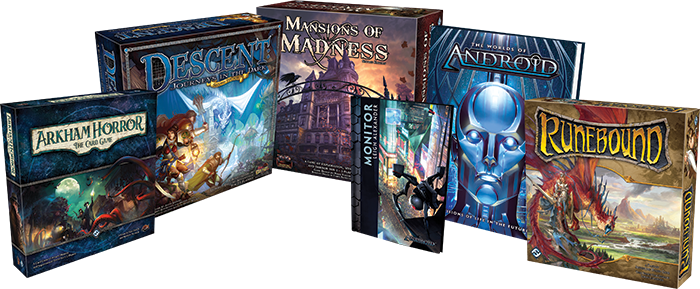
In September 2016, FFG announced it would stop selling Games Workshop licensed products starting February 28, 2017. That included Warhammer Fantasy and Warhammer 40,000 lines. For the average player, this reads like a sudden disappearance. For the business side, it’s a license relationship ending and a catalog being cut.
Then in June 2018, FFG announced it would stop selling Android: Netrunner products starting October 22, 2018, with Reign and Reverie as the final release. Again, not “we hate this game now.” Just “the license is over.”
Those two announcements, close together, matter because they remove two major pillars:
- A chunk of premium licensed product lines
- One of the most beloved competitive LCG communities in modern tabletop history
If you want to understand why people emotionally ask “What happened to Fantasy Flight Games,” this is part of it. A lot of the “FFG identity” was attached to titles that could vanish when contracts expired.
For Netrunner fans, the story didn’t end there. The community found a way to keep the game alive, which we’ve covered in detail here: The Complete Guide to Modern Netrunner. But the fact that the community had to do that at all tells you what licensing does to “forever games.”
X-Wing: the hit that proved a different kind of business case
FFG launched Star Wars: X-Wing Miniatures Game at Gen Con in August 2012. It became a monster, the kind of product line that can reshape a company’s internal priorities. Miniatures games print money when they hit. The model is simple: sell a starter, then sell plastic ships forever.
But here’s what’s easy to miss: once a miniatures line becomes important enough, it also becomes important enough to get reorganized.
In November 2020, Asmodee announced that development oversight for X-Wing, Armada, and Legion would move from FFG to Atomic Mass Games, Asmodee’s miniatures-focused studio. That is a corporate sentence that reads boring, but it has sharp implications:
- FFG no longer owned the center of gravity for Star Wars miniatures
- One of its strongest recurring revenue engines was now run elsewhere
- “Fantasy Flight” was being narrowed into a more specific box
This is a pattern in conglomerates: you don’t keep everything under one roof. You split studios by category, then you optimize them for that category’s economics.
If you loved the old FFG because it felt like one studio making everything, this is one of the moments where that stops being true.
2020: the year the hobby got quiet, and FFG got reorganized
If you want a year where the public signals stack up, it’s 2020.
That January, reporting and community posts pointed to layoffs at Fantasy Flight, including the closure of Fantasy Flight Interactive, plus major changes around the RPG side. There’s no way to make layoffs sound like a fun “pivot.” They are what they are: headcount reductions, departments shrinking, and priorities narrowing.
Then, in March 2020, Asmodee clarified that Edge Studio would become the main RPG development home under its banner. And over time, multiple RPG lines previously associated with FFG were maintained through Edge Studio.
Put those together and you get a picture: FFG was no longer being treated as the all-in-one creative mothership. It was being turned into one label within a wider machine, with specific lanes.
That can make the business healthier. It can also strip out the weirdness that made fans obsess.
2022: KeyForge gets sold, and that’s a signal you don’t ignore
KeyForge mattered because it was one of FFG’s biggest “new idea” swings late in the game. A Richard Garfield design. A unique-deck concept. A whole promise that card games could do something different.
In June 2022, Ghost Galaxy acquired the KeyForge IP and rights from Asmodee. This is a “follow the money” moment. Companies sell things when they don’t fit the new strategy, or when they’d rather redeploy attention elsewhere.
In other words: even when FFG created something that felt like classic FFG experimentation, it still lived inside the portfolio logic of its parent company. And portfolios prune.
KeyForge leaving doesn’t mean it failed as a concept. It means it stopped being core.
The market changed around them: crowdfunding ate the middle of the table
Here’s the part that isn’t about FFG at all. It’s about the industry.
Crowdfunding normalized a different relationship between publisher and customer:
- Customers pay early
- Hype becomes part of the product
- Stretch goals become marketing
- Retail becomes secondary for many big-box experiences
FFG mostly stuck to traditional retail distribution for big board games. That used to be the default. Now it’s a strategic choice with consequences. Crowdfunding lets publishers shift risk onto customers and gauge demand before manufacturing. Retail-first means you carry the risk yourself.
If you were a company already becoming more risk-averse after a merger, crowdfunding’s rise is basically a trap door. Your competitors can do bigger, flashier, more expensive boxes with less financial exposure, while you’re stuck making safer bets.
This is where the “FFG feel” migrates to other publishers. Not because they’re more talented, but because the new model rewards bolder looking projects.
So what is FFG now: smaller output, bigger focus, fewer surprises
This is where the story becomes less tragic and more realistic.
FFG still publishes. It still supports major lines. It still has real weight in the hobby.
Look at Twilight Imperium. On July 31, 2025, FFG announced Thunder’s Edge, a new expansion for Twilight Imperium Fourth Edition. Then in October 2025, FFG announced the expansion was available, positioning it as a major release with new factions and even an alternate mode called Twilight’s Fall.
That’s not a dead publisher. That’s a publisher choosing its moments.
But if you browse FFG’s current public-facing news cycle, you see what the focus is: ongoing support for a smaller set of proven lines, especially expandable card games and flagship brands. That’s what a portfolio strategy looks like. It is steadier, and it is also less romantic.
And yes, that’s why it feels like the website is quieter. It’s not that nothing is happening. It’s that “new big box surprise every five minutes” is no longer the operating system.
The cleanest explanation: the brand didn’t die, the company changed shape
If you came here wanting a single villain, you’re going to be disappointed.
The public record points to a few forces acting together:
- Licensing is fragile. Some of FFG’s most iconic eras were built on deals that could end on a calendar date.
- Corporate ownership changes incentives. The 2014 Asmodee merger didn’t instantly ruin the catalog, but it did change what “success” means internally.
- Studios got specialized. Miniatures moved to Atomic Mass Games. RPG development consolidated under Edge Studio. Lines got redistributed.
- The market moved to crowdfunding. The biggest, flashiest “FFG-style” projects increasingly come from publishers built around preorders, not retail risk.
- Risk appetite narrowed. That’s the through-line. FFG became less willing, or less allowed, to take the kind of swings that created the old mythos.
So, What happened to Fantasy Flight Games is not really “they fell.” It’s “they got reorganized, and the world around them changed.”
If you want proof that the old energy still exists in the hobby, you can find it. It’s just scattered. Some of it is in new studios, some of it is in crowdfunded epics, and some of it is in Games Workshop’s own modern board game output, which is a very different ecosystem than the one FFG was operating in when it held Warhammer licenses. If you want a recent example of what that looks like at the table, we reviewed one here: Warhammer Quest: Darkwater Board Game Review (Kraken Opus).
The strange twist is that this might be the most stable timeline. FFG is still around. Twilight Imperium is still getting support. Flagship lines still get content. The gunslinger didn’t die. He just stopped taking every duel.