
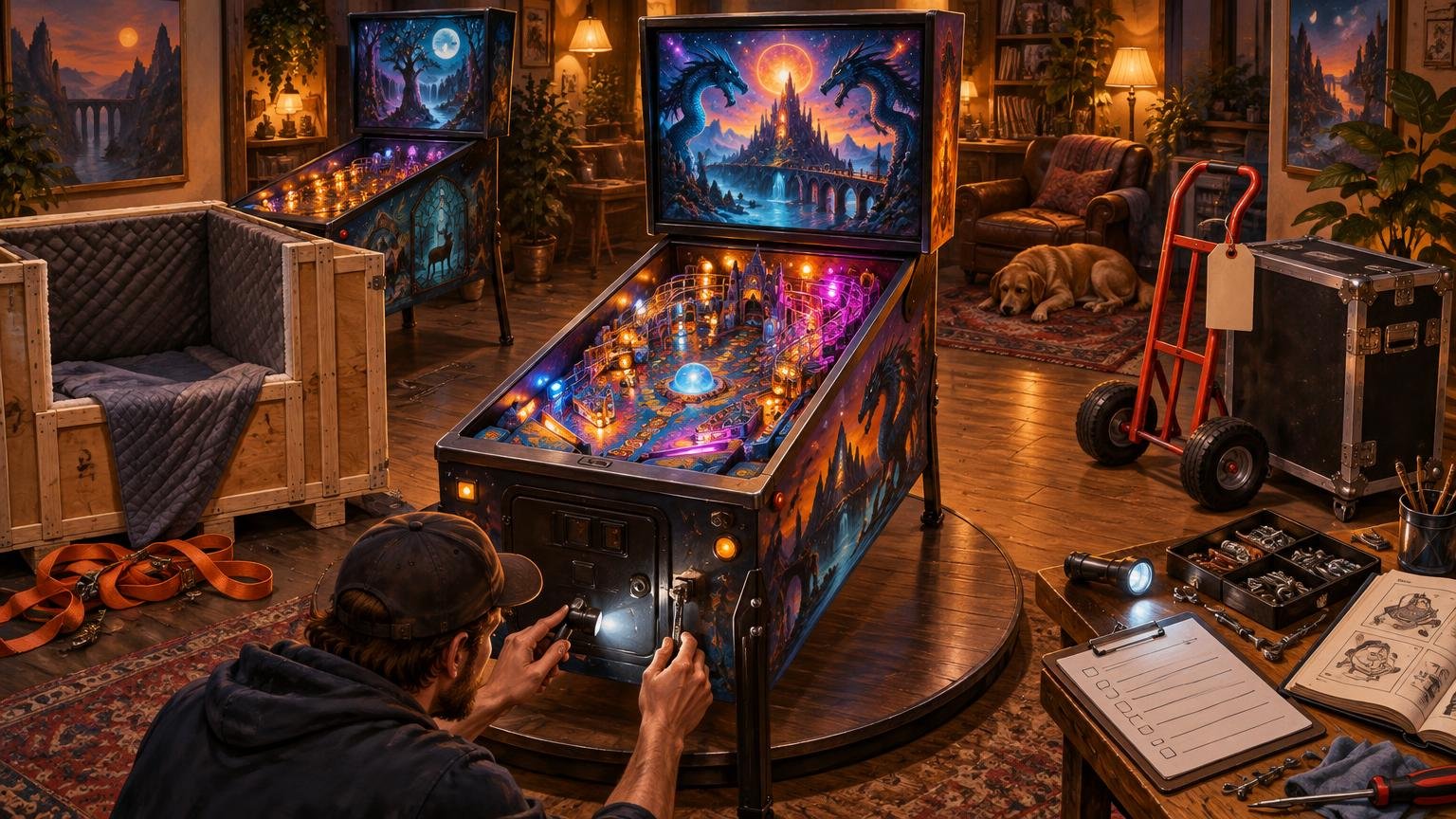
A good pinball collection rotation should solve a specific problem. Sell when you want a clean exit, trade when another known machine would improve the lineup, rent when you want temporary variety without another permanent cabinet, and keep when the game still earns its floor space. The difficult part is separating genuine collection friction from a temporary spell of boredom.
Pinball makes that distinction unusually important. A machine is simultaneously a game, a large physical object, an electrical and mechanical system, and a maintenance queue wearing attractive cabinet art. The right decision is not simply which title you like most. It is which machine still justifies its space, upkeep, tied-up money, and opportunity cost.
Start with the problem you want rotation to fix
Collectors often begin with a proposed transaction: “Should I sell this?” Start one step earlier. Identify what feels wrong about the current lineup.
- The machine receives little play even when it is working perfectly.
- Several machines occupy the same gameplay niche, theme, era, or rules-complexity slot.
- A persistent fault makes one cabinet feel like an unfinished obligation.
- The room is crowded enough that access, cleaning, or glass removal has become difficult.
- You want a particular replacement and must release space or money first.
- You still enjoy the machine but crave short-term novelty.
- The game has sentimental or replacement value that is not reflected by its current play count.
These problems point toward different answers. Low play and no emotional attachment favor selling. Redundancy may favor a trade. Temporary restlessness favors renting or a deliberate break. A difficult-to-replace favorite with a minor repair backlog probably needs maintenance, not exile.
This is the system underneath collection rotation: you are allocating scarce space among experiences. A cabinet does not earn permanent residency merely by being good. It earns residency by contributing something the rest of the room does not.
Sell, trade, rent, or keep at a glance
| Option | Best when | Main advantage | Main friction |
|---|---|---|---|
| Sell | You want space, funds, or a clean exit | Maximum freedom after the transaction | Pricing, listing, inspection, and transport |
| Trade | You know what kind of replacement you want | One cabinet can leave as another arrives | Finding a suitable match and balancing condition |
| Rent | You want temporary variety or a trial period | Novelty without permanent expansion | Transport, terms, liability, and limited availability |
| Keep | The machine remains distinctive or difficult to replace | Preserves a known, documented game | Space, maintenance, and opportunity cost continue |
No row is automatically superior. The correct option is the one that removes the actual bottleneck rather than merely creating activity. Trading one underplayed machine for a different underplayed machine is not rotation; it is furniture migration with paperwork.
Build a machine record before making the decision
A useful collection log does more than record a title. Pinside’s collection-management tools can track machines owned, sold, and wanted, along with details such as purchase and sale prices, production dates, and serial numbers. That makes it possible to keep identity, transaction history, and condition notes separate instead of relying on memory.
Record the exact edition as well as the theme. Stern’s manual library lists separate documentation for many Pro, Premium, and Limited Edition versions, illustrating why the theme name alone may not identify the machine accurately. Stern’s game-manual library is a useful starting point for checking the appropriate documentation.
A practical record can include:
- Manufacturer, title, exact edition, serial number, and known production information
- Acquisition date and price, if you want those figures in the collection log
- Installed software revision and the date it was checked
- Included manuals, keys, spare parts, toppers, and removable accessories
- Modifications, replacement parts, and any retained original components
- Known faults, intermittent behavior, cosmetic wear, and cabinet damage
- Recent diagnostic checks and completed service work
- Clear photographs of the cabinet, playfield, backbox, boards, display, and damaged areas
These fields are provenance and condition notes, not a universal grading system. They will not transform a scratched cabinet into a pristine example, but they reduce ambiguity. They also make the collection easier to manage for broader practical purposes; a maintainable hobby collection inventory is more useful than a heroic spreadsheet abandoned after one exhausting weekend.
When keeping the machine is the rational choice
Keep a machine when its contribution is difficult to replace. That contribution might be sentimental, mechanical, social, or structural. An older electromechanical game may provide a kind of immediate, tactile play that none of the modern machines beside it offers. A deep modern ruleset may be the cabinet everyone returns to for long sessions. A simpler game may be the only one visitors can understand before their ball drains.
Low recent play is evidence, but it is not a verdict. Pinball use can be cyclical. A machine may go quiet while a new arrival absorbs attention and then recover once the novelty settles. Before selling a former favorite, clean it, address known faults, update its documentation, and give it a defined evaluation window. Count voluntary starts rather than the games you force yourself to play in the name of research.
Keeping also makes sense when replacement would be unusually burdensome. That does not require predicting future prices. Ask a more grounded question: if this exact edition and condition disappeared tomorrow, would you willingly repeat the search, inspection, transport, and repair process? If the answer is an immediate and unhappy yes, selling may create more friction than it removes.
Sell when you want flexibility rather than another negotiation
Selling is the cleanest form of rotation because it separates departure from replacement. You can clear the space now and choose the next machine later. That breathing room is useful when you are unsure what the collection lacks or when every hypothetical replacement currently feels exciting.
Prepare the machine before setting a price. Confirm its precise identity, document what works, disclose what does not, gather included parts, and photograph it under useful lighting. A buyer should be able to distinguish ordinary wear from damage and factory equipment from later modifications.
Pinside operates a second-hand marketplace for machines, parts, and accessories. Its rules distinguish hobbyist listings from commercial activity and allow buyer feedback after successful sales. It is a transaction venue, however, not a universal price guide for every condition, location, or edition. Pinside’s selling guidance explains the platform-specific process.
Price should reflect the actual machine being offered, not merely the highest number attached to the same title somewhere online. Edition, condition, functionality, modifications, included accessories, location, and transport burden can all change the proposition. An optimistic listing proves that somebody typed a number; it does not prove that a comparable machine sold for it.
Trade when both collections have a clearer role to fill
A trade is attractive when you know what the outgoing machine lacks and what the incoming machine should add. Perhaps you have several long, mode-driven modern games but want one fast game with transparent scoring. Perhaps two machines appeal to the same players, while the lineup has nothing approachable for a newcomer. The trade is strongest when it changes the collection’s behavior rather than merely its artwork.
Evaluate each side as if it were a separate purchase and sale. Compare exact editions, cosmetic state, operating faults, software, modifications, spares, and transport requirements. “Same title” is not the same as “same machine,” and equal enthusiasm is not proof of equal condition.
Cash adjustments can reconcile a difference, but they cannot repair a vague inspection. Both parties should know what is included, who handles loading, when ownership changes, and what happens if the machine behaves differently on arrival. Pinball is excellent at developing an intermittent fault precisely when several adults are standing around pretending not to be worried.
Use renting to buy information or temporary variety
Renting can mean bringing a commercial rental into your room or allowing another person to use one of your machines. Those are materially different arrangements, but both replace a permanent collection decision with a time-limited one.
Renting a machine can be sensible when you want to test whether its rules sustain home play after the public-location novelty wears off. It can also refresh a static lineup for an event or season without requiring another purchase. The useful output is information: how often the cabinet gets played, who enjoys it, whether its sound and lighting suit the room, and whether its maintenance demands fit your tolerance.
Renting out your own machine introduces more exposure. Transport, stairs, setup, permitted use, repair authorization, damage responsibility, insurance, payment, collection dates, and cancellation terms should be settled in writing. Requirements vary by provider and location, so this is not the moment for a handshake agreement assembled beside a running machine.
If those logistics feel larger than the benefit, consider a simpler temporary rotation: power down a machine, cover it appropriately, and emphasize other games for a month. Absence can reveal whether you miss the game or merely dislike the thought of selling it.
Inspect and document the machine before handoff
For a modern Stern using the SPIKE platform, official diagnostics include tests for switches, coils, lamps, flash lamps, nodes, and other functions. Stern describes the switch test as a way to identify stuck or open switches and advises activating a switch with a real ball rather than a finger. A completed diagnostic session supports saying those tests were performed; it does not prove that the machine has no intermittent, mechanical, or cosmetic faults.
Software should also be identified precisely. Stern’s SPIKE documentation describes update files in the .spk format loaded from a blank FAT32-formatted USB drive, as well as complete SD-card images for applicable machines. These procedures are platform-specific, not general instructions for every pinball machine. Check the correct manufacturer and model documentation before updating anything.
Manufacturer documentation is equally important for parts. SPIKE machines use distributed node boards, and some standardized boards appear across multiple games, but that does not make boards, mechanisms, or cosmetic parts universally interchangeable. Verify the machine, board or part number, and applicable manual instead of trusting visual similarity.
Treat safety as part of the transaction rather than a footnote. Stern warns of potentially lethal voltages in the backbox and instructs owners to power down and disconnect the line cord before servicing switches, coils, lamps, or wiring, except when a diagnostic procedure specifically requires powered testing. If a repair exceeds your knowledge, disclose the fault and use an appropriate technician rather than improvising an electrical adventure.
Create a repeatable rotation rule
A rotation policy prevents every decision from becoming an emotional referendum on your identity as a collector. Review the lineup at a fixed interval and score each machine informally across five questions:
- Does it still receive voluntary play?
- Does it offer an experience another machine does not?
- Is its maintenance burden acceptable?
- Would replacing it later be difficult enough to cause regret?
- Is there a specific use for the space or funds it would release?
A machine that performs poorly on the first three questions and releases something useful through the fifth is a strong sale or trade candidate. A machine with modest play but a unique role and high replacement friction is a plausible keeper. If the only complaint is temporary familiarity, rent something different or pause the game before making an irreversible choice.
The objective is not maximum turnover or maximum cabinet count. It is a collection that remains playable, accessible, and worth maintaining. Sell for flexibility, trade for a better-balanced lineup, rent for information or temporary novelty, and keep the machines whose distinctive value still exceeds their friction. That is collection rotation doing its job rather than merely keeping the dolly busy.